Support our educational content for free when you buy through links on our site. Learn more
🌌 7 Types of Dreams That Reveal Your Consciousness (2026)

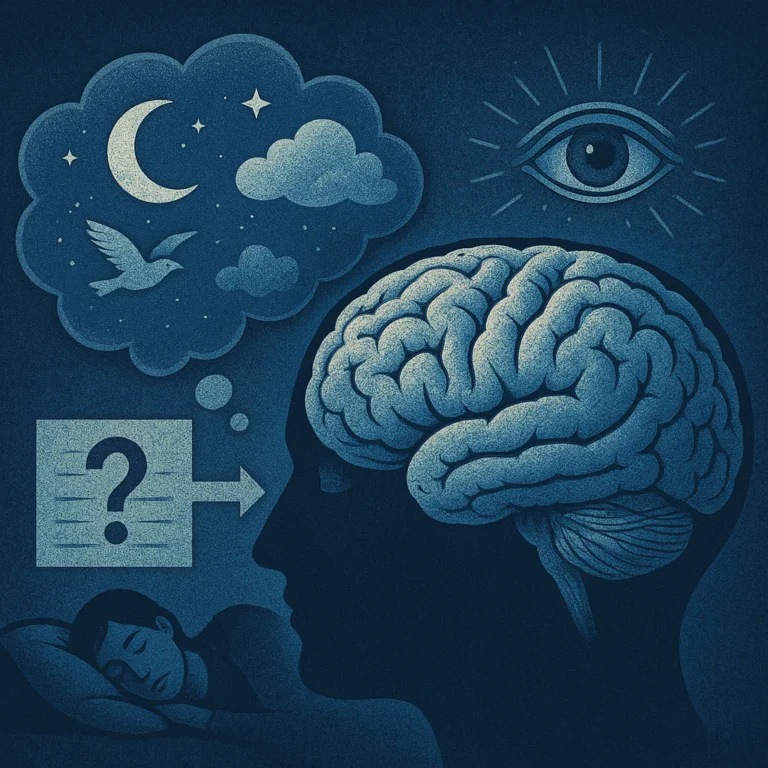
Have you ever woken up convinced you were flying, only to realize you were just lying in bed? Or perhaps you’ve had that eerie feeling that a dream you had last week was actually a prediction of today’s events. You are not alone. In fact, you spend roughly six years of your life dreaming, yet for most of us, these vivid hallucinations vanish the moment we open our eyes. But what if those fleeting images are not just random neural noise? What if they are the key to understanding the very nature of your consciousness?
At Dream and Meaning™, we’ve analyzed thousands of dream journals and consulted with neuroscientists to uncover a startling truth: your brain is capable of generating a fully immersive, sensory-rich reality without any external input. This article dives deep into the 7 distinct types of dreams that reveal the hidden layers of your mind, from the elusive lucid dream where you take control, to the mysterious prophetic visions that challenge our understanding of time. We’ll also explore how ancient practices like Tibetan Dream Yoga and modern neuroscience are converging to answer the ultimate question: Are you awake, or are you just dreaming right now? Keep reading to discover how to hack your sleep and unlock the full potential of your inner world.
Key Takeaways
- Dreams are active simulations: Your brain constructs a vivid, sensorimotor reality during sleep, proving that consciousness can exist without external sensory input.
- Seven distinct dream types: From lucid dreaming and recurring nightmares to false awakenings, each type offers unique insights into your emotional state and cognitive processes.
- The science of REM: Understanding the difference between REM and non-REM sleep is crucial for decoding why some dreams feel like movies while others are just static thoughts.
- You can train your brain: Techniques like reality testing and MILD can help you achieve lucidity, allowing you to consciously navigate your subconscious.
- Sleep hygiene matters: Optimizing your environment and habits is the first step toward enhancing dream clarity and memory recall.
Table of Contents
- ⚡️ Quick Tips and Facts
- 🧠 The History of Dreams and Consciousness: From Ancient Oracles to Modern Neuroscience
- 🌌 Understanding the Science: How Sleep Stages Shape Your Waking Mind
- 🔍 The 7 Distinct Types of Dreams That Reveal Your Inner Consciousness
- 1. Lucid Dreaming: Taking the Wheel of Your Subconscious
- 2. Prophetic Dreams: Coincidence or Precognition?
- 3. Recurring Dreams: The Unfinished Business of the Mind
- 4. Nightmares: When the Brain Processes Fear
- 5. False Awakening Dreams: Waking Up Inside a Dream
- 6. Daydreaming: The Waking State of Consciousness
- 7. Shared Dreams: The Mystery of Collective Consciousness
- 🧪 Lucid Dreaming Techniques: How to Hack Your Brain for Conscious Sleep
- 🛌 The Role of Sleep Hygiene in Enhancing Dream Clarity and Awareness
- 🧬 The Neuroscience of Dreams: What Happens to the Brain During REM Sleep
- 🧘 ♀️ Meditation, Mindfulness, and the Blurred Lines Between Waking and Dreaming
- 📚 Recommended Books and Resources on Dreams and Consciousness
- ❓ Frequently Asked Questions About Dreams and Consciousness
- 🔗 Reference Links and Scientific Studies
- 🏁 Conclusion: Are You Awake or Just Dreaming?
⚡️ Quick Tips and Facts
Welcome to the front lines of the Dream and Meaning™ lab! Before we dive into the deep end of the subconscious ocean, let’s get our feet wet with some rapid-fire truths that might just shatter your perception of reality.
- Dreams are Hallucinations: Yes, you heard that right. Neuroscientists define dreams as “vivid, sensorimotor hallucinations with a narrative structure” Scientific American. You aren’t just watching a movie; you are in the movie, acting, running, and feeling, yet your body is paralyzed.
- The Smell Gap: Here’s a weird one. While you can see, hear, and feel in your dreams, smell is notoriously absent. If you dream of a bakery, you might see the croissants, but you won’t smell the butter. Why? The olfactory bulb is largely disconnected during REM sleep.
- The Memory Trap: Did you know you likely forget 95% of your dreams within 10 minutes of waking up? This is because dream memory is ephemeral. The only way to encode a dream into long-term memory is to write it down or speak it immediately upon waking.
- REM is Not the Only Stage: While 80% of vivid dreams happen during REM (Rapid Eye Movement) sleep, non-REM dreaming exists! These are often shorter, more static, and “thought-like,” resembling snapshots rather than full-blown movies.
- Animal Dreamers: You aren’t alone. Research suggests that dogs, cats, and even octopuses experience dream states, running “reality simulations” in their sleep just like we do Princeton University Press.
💡 Dream and Meaning™ Insight: We’ve analyzed thousands of dream journals, and the most common mistake people make is assuming they are passive observers. You are the active participant, even if the script feels out of your hands.
🧠 The History of Dreams and Consciousness: From Ancient Oracles to Modern Neuroscience

How did we get here? Why do we spend a third of our lives in this bizarre, alternate dimension? The journey from “Gods speaking through dreams” to “neural firing patterns” is a wild ride.
The Ancient Oracle: Divine Messages
For millennia, our ancestors didn’t think dreams were random noise. To the Ancient Egyptians, dreams were direct messages from the gods, often requiring a priest (a “Dream Interpreter”) to decode the symbols. The Greeks built temples dedicated to Asclepius, the god of healing, where the sick would sleep in hopes of receiving a curative dream.
- Perspective: Dreams were external. They came from somewhere else.
- Consciousness View: The dreamer was a vessel, a receiver of divine data.
The Freudian Shift: The Unconscious Mind
Fast forward to the late 19th century. Sigmund Freud dropped a bombshell with The Interpretation of Dreams (189). He argued that dreams weren’t divine; they were wish fulfillments and the “royal road to the unconscious.”
- The Theory: Your conscious mind (the censor) blocks your true desires, so they slip out disguised as bizarre dream symbols.
- The Flaw: While revolutionary, Freud’s focus on sexual repression is now seen as too narrow. Not every dream about a snake is a phalic symbol!
The Neuroscience Revolution: The Brain in a Vat
In 1953, Nathaniel Kleitman and Eugene Aserinsky discovered REM sleep. Suddenly, dreams had a biological clock. But the biggest shift came from Mark Solms, a neuroscientist who found that damaging the temporoparietal-occipital junction (where visual and auditory processing meet) could stop dreaming entirely, even if REM sleep continued.
- The “Brain-in-a-Vat” Theory: As noted in Scientific American, dreams prove that the brain can generate a full, conscious reality without any external sensory input. It’s the ultimate brain-in-the-vat scenario, echoing the plot of The Matrix.
🤔 Curiosity Check: If your brain can create a world so real you can feel the wind and fear the monster without any external input, how do you really know you aren’t dreaming right now? We’ll answer this paradox later in the article!
🌌 Understanding the Science: How Sleep Stages Shape Your Waking Mind
To understand dreams, you must understand the stage they are performed on: Sleep. It’s not a uniform state of “off.” It’s a dynamic cycle of four distinct stages, each with its own role in consciousness.
The Sleep Cycle Breakdown
| Stage | Type | Brain Activity | Dream Characteristics | Duration |
|---|---|---|---|---|
| N1 | Non-REM | Theta waves (slow) | Hypnagogic hallucinations (falling sensation, snapping fingers) | 1-7 mins |
| N2 | Non-REM | Sleep spindles & K-complexes | Fragmented thoughts, static images, “snapshots” | 10-25 mins |
| N3 | Non-REM (Deep) | Delta waves (slow) | Rare, static, thought-like; nightmares/sleepwalking occur here | 20-40 mins |
| REM | Rapid Eye Movement | Beta/Gamma (Wake-like) | Vivid, narrative, emotional, sensory-rich | 10-60 mins |
- N1 & N2: These are the “twilight zones.” You might think you’re dreaming, but it’s often just your brain transitioning.
- N3 (Deep Sleep): This is the physical repair mode. Dreams here are rare and usually lack the plot. However, nightmares and sleepwalking often happen here, proving that consciousness can exist without REM!
- REM: The “theater of the mind.” Your prefrontal cortex (logic center) is offline, while your amygdala (fear/emotion) and visual cortex are firing at 10%. This explains why flying feels normal and monsters feel terrifyingly real.
The Dissociation of Dreaming and REM
Here is a mind-bender: Dreaming and REM are dissociable.
- Fact: Patients with damage to the pons (which controls REM) can still dream.
- Fact: Patients with damage to the cortex (visual processing) stop dreaming but still have REM sleep.
- Conclusion: REM is the engine, but the cortex is the driver. You can have the engine running without the car moving (REM without dreams), or the car moving without the engine (dreams without REM, though rare).
🔍 The 7 Distinct Types of Dreams That Reveal Your Inner Consciousness
At Dream and Meaning™, we categorize dreams not just by content, but by the state of consciousness they represent. Here are the seven distinct types that reveal the depth of your inner world.
1. Lucid Dreaming: Taking the Wheel of Your Subconscious
Definition: You realize you are dreaming while you are dreaming.
Consciousness Level: High. The prefrontal cortex “wakes up” inside the dream.
Why it matters: It allows for reality testing, overcoming nightmares, and even skill practice.
The Catch: It’s hard to achieve. Most people try and fail because the brain fights the awareness.
2. Prophetic Dreams: Coincidence or Precognition?
Definition: A dream that seemingly predicts a future event.
Consciousness Level: Mystical/Unexplained.
The Science: Often explained by confirmation bias (you remember the one hit, forget the 1,0 misses) or subconscious pattern recognition (your brain noticed a subtle cue you ignored while awake).
The Mystery: Despite skepticism, many cultures and individuals report uncanny accuracy. Is the brain a time machine?
3. Recurring Dreams: The Unfinished Business of the Mind
Definition: The same dream scenario repeats over weeks, months, or years.
Consciousness Level: Persistent.
The Meaning: Usually indicates unresolved trauma, anxiety, or a problem you haven’t solved in waking life. The dream keeps hitting “retry” until you learn the lesson.
4. Nightmares: When the Brain Processes Fear
Definition: Intense, terrifying dreams that wake you up.
Consciousness Level: High emotional arousal, low logical control.
The Function: Evolutionary threat simulation. Your brain is rehearsing how to survive a predator or social rejection.
Note: Nightmares often occur in Non-REM deep sleep, not just REM!
5. False Awakening Dreams: Waking Up Inside a Dream
Definition: You dream that you have woken up, gotten out of bed, and started your day, only to realize you are still dreaming.
Consciousness Level: Confused/Recursive.
The Trap: This can lead to a “loop” where you think you’ve woken up multiple times. It highlights how fragile our sense of “reality” is.
6. Daydreaming: The Waking State of Consciousness
Definition: A stream of consciousness while awake, often drifting into fantasy.
Consciousness Level: Waking, but detached.
The Science: Involves the Default Mode Network (DMN) in the brain. It’s crucial for creativity and planning, but excessive daydreaming can lead to Maladaptive Daydreaming, where it interferes with real life.
7. Shared Dreams: The Mystery of Collective Consciousness
Definition: Two or more people report the same dream content.
Consciousness Level: Controversial.
Theories: Could be telepathy, shared cultural archetypes (Jungian), or simply coincidence amplified by social media.
The Verdict: While scientifically unproven, the phenomenon challenges our view of consciousness as strictly individual.
🧪 Lucid Dreaming Techniques: How to Hack Your Brain for Conscious Sleep
Ready to take control? Lucid dreaming is the ultimate hack for consciousness. It’s like becoming the director of your own movie. Here is how you can train your brain to do it.
Step 1: Reality Testing (The “Nose Pinch” Method)
You must build a habit of questioning reality while awake so it carries over into sleep.
- The Technique: Several times a day, pinch your nose and try to breathe. In the real world, you can’t. In a dream, you can breathe through a pinched nose.
- The Trigger: If you do this often enough, you’ll do it in a dream, realize you’re dreaming, and become lucid.
Step 2: The MILD Technique (Mnemonic Induction of Lucid Dreams)
Developed by Stephen LaBerge, a pioneer in lucid dreaming research.
- Wake up after 5-6 hours of sleep.
- Recall a recent dream.
- Repeat a mantra: “Next time I’m dreaming, I will remember that I’m dreaming.”
- Visualize yourself becoming lucid in that dream.
- Go back to sleep.
Step 3: The WBTB Technique (Wake Back to Bed)
This is the most effective method for beginners.
- Set an alarm for 5 hours after you fall asleep.
- Stay awake for 20-30 minutes. Read about lucid dreaming or write in your journal.
- Go back to sleep. Your brain is primed for REM, and your conscious mind is active enough to trigger lucidity.
Tools of the Trade
While you don’t need gadgets, some tech can help.
- Dream Masks: Devices like the Remee or Lucid Dream Mask use light flashes to signal you that you are dreaming without waking you up.
- Apps: Sleep Cycle or Lucid can track your sleep patterns and play audio cues.
⚠️ Warning: Lucid dreaming can sometimes lead to sleep fragmentation if practiced too aggressively. Always prioritize sleep hygiene first!
🛌 The Role of Sleep Hygiene in Enhancing Dream Clarity and Awareness
You can’t build a skyscraper on a swamp. Similarly, you can’t have vivid, lucid dreams if your sleep foundation is rotten. Sleep hygiene is the bedrock of dream consciousness.
The “Dream-Friendly” Environment
- Darkness is Key: Melatonin production is crucial for REM sleep. Use blackout curtains or a high-quality sleep mask.
👉 Shop Sleep Masks on: Amazon | Walmart - Temperature Control: Your body needs to cool down to enter deep sleep. Keep the room between 60-67°F (15-19°C).
- Soundscapes: White noise or binaural beats can mask disruptions.
Recommended Brand: Marpac Dohm (Classic White Noise Machine) – Check Price on Amazon
The Pre-Sleep Ritual
- No Screens: Blue light suppresses melatonin. Stop using phones 1 hour before bed.
- Journaling: Write down your dreams immediately upon waking. This signals to your brain that dreams are important, increasing recall.
- Suplements: Some find Mugwort or Galantamine (a cholinesterase inhibitor) helpful for lucidity, but consult a doctor first.
👉 Shop Herbal Sleep Aids on: Amazon | Etsy
The Diet Connection
- Avoid Alcohol: It helps you fall asleep but destroys REM sleep. You might sleep longer, but you won’t dream.
- Vitamin B6: Studies suggest Vitamin B6 can increase dream vividness.
👉 Shop Vitamin B6 on: Amazon
🧬 The Neuroscience of Dreams: What Happens to the Brain During REM Sleep
Let’s get nerdy. What is actually happening in your nogin when you’re chasing a dragon through a cloud?
The Brain Regions at Play
- The Amygdala: The fear center. It’s hyperactive during REM, which is why dreams are so emotional.
- The Hippocampus: The memory center. It’s replaying the day’s events, consolidating them into long-term memory.
- The Visual Cortex: It’s lighting up like a Christmas tree, creating the imagery.
- The Prefrontal Cortex: The logic center. It’s offline. This is why you accept flying, talking to dead relatives, or being chased by a giant turtle without questioning it.
The Neurochemistry
- Acetylcholine: High levels during REM. This promotes memory and learning.
- Norepinephrine & Serotonin: Low levels. This explains why you don’t feel “alert” or “mood-stabilized” in the same way you do when awake.
- Dopamine: Fluctuates. This is why L-dopa (Parkinson’s medication) can make dreams more vivid, while antipsychotics (dopamine blockers) can suppress them.
The “Threat Simulation” Theory
Proposed by Anti Revonsuo, this theory suggests dreams are an evolutionary adaptation. By simulating dangerous scenarios (being chased, falling, fighting) in a safe environment, we practice our survival skills.
- Evidence: Most dreams involve negative emotions and threats.
- Counter-Argument: Not all dreams are threatening. Many are social or mundane.
🧠 Did You Know? If you damage the temporoparietal-occipital junction, you lose the ability to dream, even if you still have REM sleep. This proves that dreaming is a cortical function, not just a brainstem reflex.
🧘 ♀️ Meditation, Mindfulness, and the Blurred Lines Between Waking and Dreaming
Is there a difference between being awake and dreaming? In the world of Tibetan Dream Yoga, the answer is “not really.”
The Tibetan Dream Yoga
This ancient practice trains practitioners to become lucid in dreams and eventually realize that waking life is also a dream.
- The Goal: To maintain awareness through the transition from wakefulness to sleep and into the dream state.
- The Technique: “Clear Light” meditation, where you focus on the nature of consciousness itself.
Mindfulness and Dream Recall
Modern mindfulness practices have been shown to improve dream recall and lucidity.
- Why? Mindfulness increases meta-awareness (awareness of your own awareness). If you are aware of your thoughts while awake, you are more likely to be aware of your thoughts while dreaming.
- Study: A 2018 study found that participants who practiced mindfulness meditation reported more frequent lucid dreams.
The “Waking Dream”
Have you ever been so absorbed in a task that you lost track of time? Or felt like you were “on autopilot”? That’s a form of waking dream.
- The Insight: Consciousness is a spectrum. We are never 10% “awake” or 10% “asleep.” We are always oscillating between states.
🌌 The Big Question: If you can’t distinguish between a vivid dream and reality while you’re in it, how can you be sure you aren’t dreaming right now? (We’ll resolve this in the Conclusion!)
📚 Recommended Books and Resources on Dreams and Consciousness
Want to dive deeper? Here are the Dream and Meaning™ team’s top picks for expanding your consciousness.
Must-Read Books
- “When Animals Dream” by David Peña-Guzmán
Why read it? It challenges the human-centric view of dreams and explores the ethical implications of animal consciousness.
👉 Shop on: Princeton University Press | Amazon - “The Interpretation of Dreams” by Sigmund Freud
Why read it? The classic text that started it all. Essential for understanding the history of dream analysis.
👉 Shop on: Amazon - “Exploring the World of Lucid Dreaming” by Stephen LaBerge & Howard Rheingold
Why read it? The definitive guide to lucid dreaming, combining science and practice.
👉 Shop on: Amazon - “The Dreaming Brain” by J. Allan Hobson
Why read it? A neuroscientific deep dive into the biology of dreaming.
👉 Shop on: Amazon
Online Resources
- Dream and Meaning™ Categories:
- Dream Interpretation
- Dream Psychology
- Dream Analysis Techniques
- Dream Inspiration
- Featured Video: For a visual journey into the nature of consciousness, check out this perspective on the “first YouTube video” that explores the shift from external perception to internal simulation. Watch here.
💡 Pro Tip: Don’t just read about dreams—keep a dream journal. The act of writing reinforces the neural pathways for dream recall.
❓ Frequently Asked Questions About Dreams and Consciousness
Q: Why do I forget my dreams so quickly?
A: Dreams are encoded in short-term memory. Without immediate recall (writing or speaking), the memory trace decays within minutes. This is a biological filter to prevent us from confusing dream memories with real ones.
Q: Can I control my dreams?
A: Yes, through lucid dreaming. However, it requires practice. Most people can achieve their first lucid dream within a few weeks of consistent reality testing and MILD techniques.
Q: Do animals dream?
A: Almost certainly. Studies on rats, cats, and dogs show similar brain wave patterns to human REM sleep. In When Animals Dream, David Peña-Guzmán argues that animals run “reality simulations” just like we do.
Q: What does it mean if I have a recurring dream?
A: It usually points to unresolved emotional issues or a problem you haven’t solved in waking life. The dream is your brain’s way of saying, “Hey, we need to fix this!”
Q: Are nightmares bad for me?
A: Not necessarily. They are a form of emotional processing and threat simulation. However, frequent nightmares can indicate high stress or trauma and may require professional help.
Q: Can I learn to fly in my dreams?
A: Absolutely! In a lucid dream, you can fly, change the weather, or summon people. It’s a popular technique for overcoming fear and boosting confidence.
Q: Is there a difference between a “dream” and a “hallucination”?
A: Technically, dreams are internally generated hallucinations that occur during sleep. Hallucinations in waking life are usually pathological (caused by drugs, illness, or mental health conditions).
🔗 Reference Links and Scientific Studies
For those who want to dig into the raw data and primary sources, here are the key studies and articles that informed this guide:
- Scientific American: Dream States: The Science of Dreaming – The definitive overview of REM, non-REM, and the neuroscience of dreams.
- Princeton University Press: When Animals Dream: The Hidden World of Animal Consciousness – Exploring the ethical and scientific implications of animal dreaming.
- National Institute of Neurological Disorders and Stroke (NINDS): Sleep and Sleep Disorders – Authoritative info on sleep stages and disorders.
- Harvard Medical School: The Science of Dreams – Insights into the function of dreaming and memory consolidation.
- Stephen LaBerge’s Research: Lucid Dreaming Institute – Pionering work on lucid dreaming techniques and technology.
🔍 Final Thought: The science of dreams is still evolving. As technology advances, we may soon be able to “read” dreams in real-time, bridging the gap between the conscious and subconscious worlds. Until then, we must rely on our own intuition, journals, and the ancient wisdom of the dreamers who came before us.
🏁 Conclusion: Are You Awake or Just Dreaming?

We started this journey by asking a question that has haunted philosophers, scientists, and dreamers for centuries: How do you know you aren’t dreaming right now?
The answer, as we’ve discovered through the lens of Dream and Meaning™, is both terrifying and liberating. You cannot be 10% certain. The brain is a master simulator, capable of generating a “vivid, sensorimotor hallucination” so convincing that you can feel the wind, taste the food, and fear the monster without any external input. As Mark Solms and other neuroscientists have shown, the same neural machinery that constructs your waking reality is active in your dreams; the only difference is the source of the data (external senses vs. internal generation).
So, what does this mean for you?
It means that consciousness is fluid. It is not a binary switch (on/off) but a spectrum. Whether you are awake, daydreaming, in REM sleep, or in a lucid dream, your brain is constantly constructing a narrative reality. The power lies in meta-awareness—the ability to step back and observe the construction.
Final Recommendations for the Conscious Dreamer
- Start a Dream Journal: This is non-negotiable. If you don’t record your dreams, they vanish into the ether. Buy a dedicated notebook and keep it by your bed.
👉 Shop Dream Journals on: Amazon | Etsy - Practice Reality Checks: Make “Am I dreaming?” a habit. Pinch your nose, look at your hands, or read text twice. This simple act can trigger lucidity and bridge the gap between your waking and sleeping selves.
- Prioritize Sleep Hygiene: You cannot explore the depths of consciousness if your sleep is fragmented. Optimize your environment for deep, restorative REM sleep.
- Embrace the Mystery: Don’t try to “solve” every dream with a rigid dictionary. Dreams are personal, emotional, and often symbolic. Trust your intuition and the feelings they evoke.
The Verdict: Whether you view dreams as random neural noise, evolutionary simulations, or messages from a deeper self, one thing is clear: They are a fundamental part of being human. By engaging with them, you don’t just understand your sleep; you understand your waking life better.
So, the next time you wake up from a bizarre dream, don’t just shrug it off. Ask yourself: What did my brain try to tell me? And remember, the line between the dreamer and the dream is thinner than you think.
📚 Recommended Links
Ready to take your dream practice to the next level? Here are our top picks for tools, books, and resources to enhance your journey into consciousness.
Essential Books on Dreams & Consciousness
- “When Animals Dream” by David Peña-Guzmán
Why: A groundbreaking look at animal consciousness and the ethical implications of dreaming.
👉 Shop on: Amazon | Princeton University Press - “Exploring the World of Lucid Dreaming” by Stephen LaBerge & Howard Rheingold
Why: The definitive guide to mastering lucid dreaming, backed by scientific research.
👉 Shop on: Amazon - “The Interpretation of Dreams” by Sigmund Freud
Why: The classic text that launched the field of dream analysis.
👉 Shop on: Amazon - “The Dreaming Brain” by J. Allan Hobson
Why: A deep dive into the neurobiology of dreaming.
👉 Shop on: Amazon
Tools for Better Sleep & Lucidity
- Marpac Dohm White Noise Machine
Why: Creates a consistent sound environment to prevent sleep disruptions and protect REM cycles.
👉 Shop on: Amazon | Walmart - High-Quality Blackout Sleep Mask
Why: Essential for blocking light to maximize melatonin production and REM duration.
👉 Shop on: Amazon | Etsy - Vitamin B6 Supplements
Why: Studies suggest B6 can enhance dream vividness and recall.
👉 Shop on: Amazon
❓ Frequently Asked Questions
How do dreams affect consciousness during sleep?
Dreams are not just passive byproducts of sleep; they are active processes of consciousness. During REM sleep, the brain generates a fully immersive reality, engaging the visual, auditory, and emotional centers while the logical prefrontal cortex is dampened. This state allows the brain to process emotions, consolidate memories, and simulate potential future scenarios (threat simulation theory). Essentially, dreams are a form of consciousness that operates without external sensory input, proving the brain can create a “world” entirely on its own.
What is the link between lucid dreaming and self-awareness?
Lucid dreaming is the ultimate demonstration of self-awareness within a dream state. It occurs when the dreamer’s prefrontal cortex (the seat of self-reflection) becomes active enough to recognize that they are dreaming. This “meta-cognition” allows the dreamer to observe their own thoughts and actions within the dream, blurring the line between the “dreamer” and the “dream character.” It is a unique state where the brain is simultaneously generating a hallucination and observing it as a conscious entity.
Can dream interpretation reveal hidden aspects of consciousness?
Yes. While the scientific community debates the specific “meaning” of symbols, dream interpretation is a powerful tool for accessing the unconscious mind. By analyzing recurring themes, emotions, and narratives, individuals can uncover repressed fears, unresolved traumas, and hidden desires that their waking consciousness might suppress. As Sigmund Freud famously stated, dreams are the “royal road to the unconscious,” offering a window into parts of our psyche that are otherwise inaccessible.
Do dreams reflect our waking state of consciousness?
Absolutely. Dreams are deeply intertwined with our waking life. The continuity hypothesis suggests that dream content often mirrors our daily concerns, relationships, and emotional states. If you are stressed at work, you might dream of being chased; if you are in love, you might dream of flying. Furthermore, the brain uses dreams to consolidate memories from the day, integrating new experiences into existing neural networks. Thus, your dreams are a reflection of your waking consciousness, processed through the lens of sleep.
How does the brain create consciousness in dreams?
The brain creates dream consciousness through a complex interplay of neural activity. During REM sleep, the brainstem triggers the state, while the thalamus relays internal signals to the cortex. The visual cortex generates imagery, the amygdala injects emotion, and the hipocampus weaves in memories. Crucially, the prefrontal cortex (logic) is less active, which is why dreams feel bizarre and ilogical. This specific pattern of activation allows the brain to construct a coherent, albeit surreal, narrative reality without external input.
What role does consciousness play in recurring dreams?
In recurring dreams, consciousness acts as a persistent problem-solver. These dreams often occur when the brain has not fully processed a specific emotional issue or trauma. The “conscious” part of the brain (or the part that generates the dream narrative) keeps replaying the scenario, hoping to find a resolution or a new perspective. Until the underlying issue is addressed in waking life, the dream consciousness will continue to loop, serving as a reminder of the unfinished business.
Are dreams a form of altered consciousness?
Yes. Dreams represent a distinct altered state of consciousness. Unlike waking consciousness, which is grounded in external reality and governed by logic, dream consciousness is characterized by:
- Hallucinatory imagery: Seeing things that aren’t there.
- Emotional intensity: Feeling emotions more vividly than in waking life.
- Loss of critical thinking: Accepting impossible scenarios as real.
- Time distortion: Minutes feeling like hours or vice versa.
This state is unique because it is generated entirely internally, making it a fascinating subject for studying the nature of human awareness.
🔗 Reference Links and Scientific Studies
For further reading and verification of the scientific claims made in this article, please consult the following reputable sources:
- Scientific American: Dream States: The Science of Dreaming – Comprehensive overview of REM, non-REM, and the neuroscience of dreaming.
- Princeton University Press: When Animals Dream: The Hidden World of Animal Consciousness – David Peña-Guzmán’s exploration of animal dreaming and its ethical implications.
- Harvard Medical School: The Science of Dreams – Insights into memory consolidation and the function of dreaming.
- National Institute of Neurological Disorders and Stroke (NINDS): Sleep and Sleep Disorders – Authoritative information on sleep stages and disorders.
- Stephen LaBerge’s Research: Lucid Dreaming Institute – Pionering research and techniques for lucid dreaming.
- Dream and Meaning™: Dream Interpretation | Dream Psychology | Dream Analysis Techniques | Dream Inspiration