Support our educational content for free when you buy through links on our site. Learn more
Dreams and Personal Growth: 15 Ways to Grow 🌙


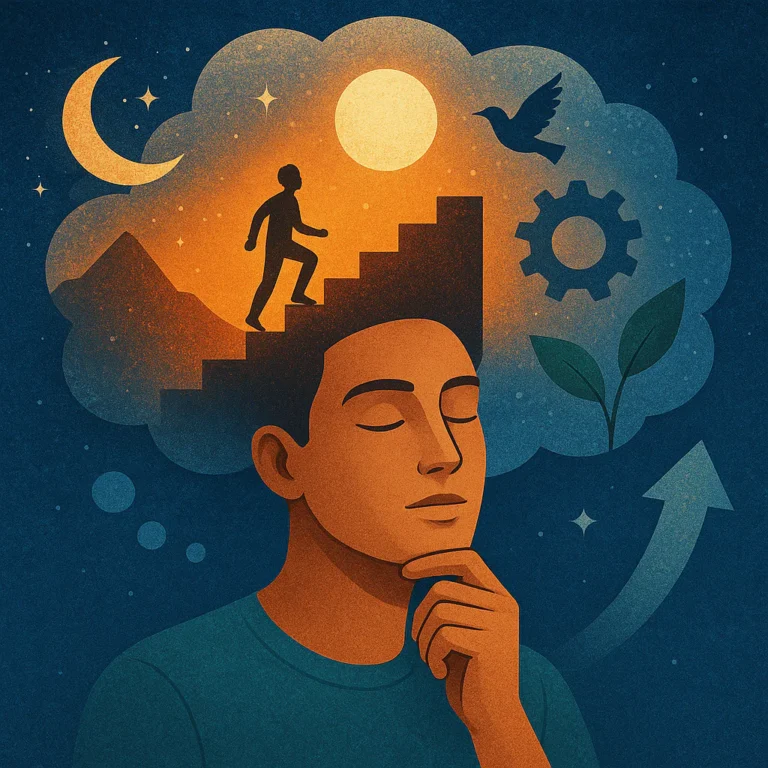
Dreams and personal growth work best together when you treat dreams as reflective clues, not unquestionable instructions. Your dreams can highlight emotions, recurring patterns, hidden assumptions, and neglected desires, while your waking choices turn those insights into meaningful change.
A dream about missing a train does not automatically mean you are destined to miss an opportunity. It might reflect pressure, fear of falling behind, or a decision you have postponed. Ask what the dream feels like, connect that feeling to waking life, and then choose one practical response.
One of our dream-journal entries began with a locked classroom and ended with a surprisingly ordinary realization: the dreamer was not afraid of failure nearly as much as being seen while still learning. That small insight changed how they asked for feedback at work. The dream did not predict the future; it revealed a pattern already shaping the present.
Dream research remains an active field, and organizations such as the Sleep Foundation emphasize that dreaming occurs across sleep, with vivid experiences commonly associated with REM sleep. The meaning is personal, but the opportunity is universal: notice more, assume less, and act thoughtfully.
Key Takeaways
- Use dreams as mirrors, not forecasts. Dream symbols do not have one universal meaning.
- Start with emotion. The feeling in a dream may be more useful than the most dramatic image.
- Keep a dream journal. Recording dreams soon after waking helps identify recurring themes and changing responses.
- Look for waking-life connections. Dreams can reflect stress, identity shifts, relationships, grief, creativity, and life decisions.
- Turn insight into action. Choose one safe, practical step instead of making a major decision from a single dream.
- Treat recurring dreams as invitations. Repetition may point to an active concern, unresolved challenge, or changing personal pattern.
- Practice healthy skepticism. Dreams can feel prophetic without providing reliable evidence about the future.
- Seek professional help for distressing nightmares. Persistent nightmares, trauma-related dreams, or disrupted sleep deserve support from a qualified clinician.
- Personal growth is the real destination. The dream opens the conversation; your waking choices write the next chapter.
Table of Contents
- ⚡️ Quick Tips and Facts About Dreams and Personal Growth
- 🧠 Dreams and Personal Growth: The Mind–Meaning Connection
- What Dreams Can Reveal About Emotions, Beliefs, and Behavior
- Dreams as Reflection, Rehearsal, and Emotional Processing
- 📚 The History and Psychology of Dream Interpretation
- Freud, Jung, and Modern Dream Research
- What Neuroscience Says About Dreaming
- Spiritual, Cultural, and Personal Perspectives on Dreams
- 🌱 How Dream Work Supports Personal Growth
- Self-Awareness and Emotional Intelligence
- Healing, Resilience, and Processing Difficult Experiences
- Creativity, Problem-Solving, and New Perspectives
- Confidence, Identity, and Life Transitions
- 🔍 How to Interpret Dreams Without Taking Symbols Literally
- Why Personal Associations Matter More Than Universal Dream Dictionaries
- The Role of Emotions, Context, and Recurring Themes
- Common Dream Symbols and Questions to Ask Yourself
- Falling, Flying, Being Chased, and Feeling Trapped
- Water, Houses, Animals, and Other Frequent Images
- Teth Falling Out, Nudity, and Other Anxiety Dreams
- 📝 15 Practical Dream Work Exercises for Self-Discovery
- 1. Keep a Consistent Dream Journal
- 2. Record Feelings Before Analyzing Symbols
- 3. Identify Recurring Dream Patterns
- 4. Track People, Places, Objects, and Actions
- 5. Ask the Dream, “What Do You Want Me to Notice?”
- 6. Use Active Imagination to Continue the Dream
- 7. Rewrite a Disturbing Dream Ending
- 8. Explore Dreams Through Drawing or Collage
- 9. Turn Dream Insights Into Reflective Questions
- 10. Connect Dream Themes With Waking-Life Decisions
- 11. Practice Lucid Dreaming Safely
- 12. Use Morning Mindfulness and Body Scanning
- 13. Compare Dreams Across Life Stages
- 14. Share Dreams With a Trusted Listener
- 15. Create a Personal Dream Symbol Dictionary
- 🛠️ How to Start Dream Work for Personal Growth
- A Simple Seven-Day Dream Journal Plan
- The Best Questions to Ask After Waking
- How to Remember More Dreams
- Dream Journaling Tools, Apps, and Notebooks
- 🌙 Lucid Dreams, Nightmares, and Recurring Dreams
- Lucid Dreaming for Confidence and Self-Exploration
- Understanding Recurring Dreams
- Nightmares as Signals of Stress and Unmet Needs
- Imagery Rehearsal Therapy and Professional Support
- ⚠️ What Dreams Do Not Predict or Prove
- Dreams, Premonitions, and Confirmation Bias
- When Symbolic Interpretation Becomes Unhelpful
- Dreams and Mental Health: When to Seek Help
- 💼 Using Dreams for Relationships, Career, and Life Decisions
- Dreams About Partners, Family, and Social Conflict
- Dreams About Work, Ambition, and Burnout
- Dreams During Grief, Breakups, and Major Change
- Turning Dream Insights Into Practical Action
- 🧘 Sleep, Stress, and Lifestyle Factors That Shape Dreams
- REM Sleep and Dream Recall
- Stress, Trauma, Medication, and Substance Use
- Sleep Hygiene for Clearer Dream Recall
- 📋 Dream Interpretation Worksheet and Journal Prompts
- A Step-by-Step Dream Analysis Template
- 30 Journaling Prompts for Inner Growth
- How to Separate Insight From Overthinking
- 👥 Working With a Dream Therapist or Dream Group
- What to Expect From Professional Dream Work
- How to Choose a Qualified Mental Health Professional
- Dream Sharing: Helpful Boundaries and Etiquette
- ✨ My Personal Journey With Dream Work and Self-Discovery
- Lessons From Recurring Dreams and Emotional Patterns
- The Waking-Life Changes That Followed
- 🚀 From Dream Insight to Lasting Personal Transformation
- How to Create a Personal Growth Action Plan
- Measuring Progress Without Forcing Meaning
- Ready to Explore Your Dreams More Deeply?
- ❓ Frequently Asked Questions About Dreams and Personal Growth
- ✅ Conclusion: Let Your Dreams Inform Your Growth
- 🔗 Recommended Links
- 💬 FAQ
- 📖 Reference Links
⚡️ Quick Tips and Facts About Dreams and Personal Growth
Dreams and personal growth make surprisingly good teammates. One brings mystery; the other brings a notebook and asks, “What on earth was that about?” At Dream and Meaning™, we treat dreams as personal material for reflection, not crystal-ball forecasts.
For a broader introduction, visit Dream and Meaning™, then explore our Dream Interpretation resources.
Quick facts worth remembering
- Dreams are usually personal, not universal. A snake may represent danger to one person, healing or fascination to another.
- Emotion often matters more than imagery. The feeling of being trapped may be more revealing than the room in which you were trapped.
- Dream recall fades quickly. Writing a few words immediately after waking can preserve details that disappear within minutes.
- Recurring dreams deserve attention, not panic. They may reflect repeating stress, unresolved conflict, changing identity, or a persistent need.
- Dreams do not reliably predict the future. Treat prophetic interpretations as spiritual or cultural beliefs, not established psychological fact.
- Dream work is not diagnosis. A disturbing dream alone does not prove trauma, illness, or hidden intent.
- Nightmares can become useful information. They may point toward stress, fear, avoidance, grief, or a need for safety.
- Personal growth requires action. A dream can suggest a question; your waking choices provide the answer.
| Dream-work question | A grounded approach |
|---|---|
| “What does this symbol mean?” | Ask, “What does it mean to me?” |
| “Was the dream literal?” | Check current emotions, relationships, stress, and memories first |
| “Is this a prediction?” | Look for psychological themes before supernatural explanations |
| “Why do I keep having it?” | Track repetition, emotional intensity, and waking-life triggers |
| “What should I do?” | Choose one small, safe action based on the insight |
Our fastest morning method: FEL
- F — Freeze the moment: Stay still for a few seconds.
- E — Extract the emotion: Name the strongest feeling.
- E — Enter the details: Record people, places, actions, colors, and sensations.
- L — Link it to life: Ask what currently evokes a similar emotional response.
The Sleep Foundation explains that dreams occur across sleep, with vivid dreaming especially associated with REM sleep. That does not make every dream a coded message, but it does make dreams valuable snapshots of the mind at work.
Dream work is best used as a mirror, not a monarch. It can reflect patterns without ruling your life.
🧠 Dreams and Personal Growth: The Mind–Meaning Connection
A dream can be bizarre, funny, frightening, or so ordinary that you wake up wondering why your brain staged a full office meeting about mismatched socks. Yet even mundane dreams may reveal emotional priorities, mental habits, and unfinished concerns.
Research on dreaming remains complex. The American Psychological Association describes dreaming as a normal sleep experience, while sleep researchers continue debating exactly how dreams relate to memory, emotion, and consciousness. That uncertainty is not a problem. It simply means we should interpret dreams with curiosity rather than overconfidence.
What dreams can reveal about emotions, beliefs, and behavior
Dreams often exaggerate an emotional pattern. If you feel overlooked at work, you may dream that nobody can hear you. If you are worried about losing control, you may dream of a car with failed brakes. The image is not a diagnosis; it is an emotional metaphor worth investigating.
Common growth-related themes include:
- Avoidance: Running from a person, animal, task, or place
- Control: Driving, steering, locking doors, managing crowds
- Belonging: Arriving late, being excluded, searching for a home
- Identity: Changing clothes, looking different, losing your name
- Capability: Flying, performing, failing an exam, being unprepared
- Boundaries: Nudity, invasion, locked rooms, unwanted attention
- Transition: Moving house, crossing water, elevators, trains, funerals
- Integration: Meeting unfamiliar versions of yourself or reconciling opposites
The most useful question is rarely “What does a house symbolize?” It is more often:
“Where in my waking life do I feel the way I felt inside that house?”
Dreams as reflection, rehearsal, and emotional processing
Several theories attempt to explain dreaming:
| Perspective | Main idea | Practical use |
|---|---|---|
| Memory consolidation | Sleep helps process and integrate recent experiences | Look for links to recent learning or events |
| Emotional processing | Dreams may simulate emotionally charged situations | Identify feelings that remain active |
| Threat simulation | Some dreams rehearse danger or helplessness | Explore fear and preparedness |
| Predictive processing | The brain generates models to make sense of experience | Notice expectations and assumptions |
| Symbolic or depth psychology | Dream images express unconscious conflicts or possibilities | Explore parts of yourself you may overlook |
No single model explains every dream. A nightmare after watching a thriller may reflect recent media exposure; a recurring childhood setting may carry deeper autobiographical meaning. The National Institute of Neurological Disorders and Stroke provides an evidence-based overview of sleep and brain function, while depth-psychology approaches offer a different, more interpretive lens.
Both perspectives can be useful when kept in proportion. Biology explains how dreaming occurs. Personal meaning helps explain why one dream lingers while another evaporates before breakfast.
What dreams can reveal about emotions
Dream emotion may be:
- Direct: You feel grief in the dream and recognize grief in waking life.
- Displaced: You argue with a stranger while the real frustration concerns a colleague.
- Amplified: Mild uncertainty becomes a dramatic disaster.
- Contradictory: You feel relief during an event you believe should make you sad.
- Somatic: Your body feels heavy, hot, exposed, numb, or unable to move.
A useful journaling format is:
| Dream element | Observation | Growth question |
|---|---|---|
| Emotion | Shame and urgency | Where am I demanding perfection? |
| Character | A silent friend | What conversation am I avoiding? |
| Setting | Childhood kitchen | What old belief is active? |
| Action | Searching for keys | What access, permission, or direction do I want? |
| Ending | Door remains locked | What boundary needs attention? |
Dreams and identity development
Personal growth frequently involves changing an old identity. You may have been the responsible child, the reliable employee, the peacemaker, or the person who never needs help. Dreams can dramatize what happens when that role becomes too small.
In the summary of the first video, Kendra Austin describes realizing that her childhood ambition no longer reflected her genuine desire. Her striking insight was that “your desire and your self-interest is enough.” That perspective fits dream work beautifully: a dream may expose the gap between what you feel you should want and what actually brings energy, curiosity, or relief.
You can watch the perspective referenced in the article at #featured-video.
Ask yourself:
- Which dream character seems most alive, free, angry, playful, or courageous?
- What quality does that character express?
- Where have I suppressed that quality?
- What would a safe, realistic expression of it look like this week?
📚 The History and Psychology of Dream Interpretation

Dream interpretation has worn many outfits: temple ritual, prophetic tradition, psychoanalysis, spiritual practice, creative exploration, and laboratory research. The outfit changes; the human fascination remains.
Freud, Jung, and modern dream research
Sigmund Freud famously called dreams the “royal road to the unconscious” in The Interpretation of Dreams. His model emphasized wish fulfillment and repressed impulses. Carl Jung expanded the conversation, viewing dreams as communications from the psyche that could support integration and individuation, his term for becoming more fully oneself.
Modern research does not simply confirm Freud or Jung. Instead, it examines sleep physiology, memory, emotion, and cognition. The Sleep Research Society and National Center for Complementary and Integrative Health provide useful context for understanding sleep and reflective practices without treating symbolic interpretation as laboratory fact.
| Approach | Strength | Limitation |
|---|---|---|
| Freudian | Highlights conflict, desire, and defense | Can overemphasize sexuality or repression |
| Jungian | Encourages wholeness, archetypes, and inner dialogue | Archetypal claims can become too broad |
| Cognitive | Connects dreams with memory and waking concerns | May underplay subjective meaning |
| Neuroscientific | Grounds dreams in brain and sleep processes | Does not always explain personal significance |
| Spiritual | Honors sacred or transcendent meaning | Can encourage certainty without evidence |
| Narrative | Treats the dream as a story about identity | May overlook sleep, medication, or trauma factors |
What neuroscience says about dreaming
Dreaming can occur during multiple sleep stages, although REM sleep is associated with vivid, emotionally intense dreams. Sleep supports memory and emotional regulation, but scientists still debate whether dreams themselves perform a specific adaptive function.
A cautious evidence-based position is:
✅ Dreams may reflect memory fragments, emotional concerns, sensory experiences, and imagination.
✅ Dream recall varies according to awakenings, sleep stage, attention, and individual differences.
❌ A single dream cannot reliably reveal a hidden truth with scientific certainty.
❌ A symbol dictionary cannot produce a universal interpretation.
For sleep concerns, the American Academy of Sleep Medicine is a better starting point than an online dream quiz. Quizzes can be entertaining; they should not be mistaken for assessment.
Spiritual, cultural, and personal perspectives
Some cultures treat dreams as guidance, ancestral communication, or spiritual experience. These frameworks can be meaningful and identity-affirming. They also vary significantly, which is one reason fixed interpretations are risky.
We recommend a three-lens method:
- Personal lens: What does this image mean in your memories and associations?
- Psychological lens: What emotion, conflict, need, or possibility does it reflect?
- Cultural or spiritual lens: What meaning does your tradition or worldview give it?
The lenses can coexist. A dream about water might evoke a childhood lake personally, emotional change psychologically, and purification spiritually. The dreamer decides which lens carries the most relevance.
🌱 How Dream Work Supports Personal Growth
Dream work is not merely decoding. It is a reflective practice that can help you observe inner patterns before they become loud enough to run your life.
Self-awareness and emotional intelligence
Dream journaling strengthens the habit of noticing:
- Emotional shifts
- Repeating fears
- Hidden assumptions
- Conflicting desires
- Inner criticism
- Longing for connection
- Resistance to change
That observation can improve emotional intelligence because you begin distinguishing what happened from what you felt about what happened.
For example:
- Event: Your manager asks for revisions.
- Conscious thought: “Fine, I’ll fix it.”
- Dream emotion: Humiliation and panic.
- Growth question: “Why does correction feel like rejection?”
The dream does not prove your manager is harmful. It may reveal that feedback touches an older wound or perfectionistic belief.
Healing, resilience, and processing difficult experiences
Dreams may revisit grief, trauma, illness, conflict, or fear. Sometimes the dream changes over time: the locked door opens, the threatening figure becomes distant, or you finally speak. Such changes may reflect a shifting relationship with the memory.
However, dreams are not a substitute for trauma treatment. The National Center for PTSD recommends evidence-based care for trauma-related symptoms. If nightmares are frequent, impair sleep, or trigger severe distress, consult a licensed mental health professional.
Creativity, problem-solving, and fresh perspectives
Dreams loosen ordinary rules. That can support creative association, though the popular story that Kekulé discovered the benzene ring through a dream should be treated as a historical anecdote rather than proof that dreams routinely solve problems.
Try asking before sleep:
“What perspective would help me approach this problem differently?”
Then record whatever appears without demanding a miracle. Perhaps you dream of a staircase, a child’s toy, or a completely unreasonable penguin in a business suit. The value may lie in the associations those images spark.
Confidence, identity, and life transitions
Dreams often intensify around:
- Starting or leaving a job
- Moving house
- Becoming a parent
- Ending a relationship
- Returning to education
- Grieving someone
- Changing faith or values
- Recovering from illness
- Becoming visible after years of hiding
Storm’s Learnlife story offers a useful waking-life parallel. He faced doubt about an unconventional educational path, then described remaining as “one of the best decisions” he had made. Dream work cannot tell you which path to choose, but it can reveal what you fear losing, what you hope to gain, and which values are competing.
A growth-focused question is:
“Am I afraid this choice is wrong, or am I afraid it will change who I am?”
That question often opens the real conversation.
🔍 How to Interpret Dreams Without Taking Symbols Literally
A dream symbol is not a vending machine. Insert “spider,” receive “fear of betrayal.” Human beings are more complicated than that, thankfully.
Why personal associations matter more than universal dream dictionaries
Dream dictionaries can offer prompts, but they cannot know:
- Your memories
- Your cultural background
- Your relationship history
- Your recent media exposure
- Your body sensations
- Your private associations
- Your current stressors
A fish might represent nourishment, a childhood holiday, vegetarianism, financial worry, spiritual depth, or simply last night’s documentary. The meaning emerges from context plus emotion plus association.
The International Association for the Study of Dreams emphasizes the value of exploring dreams through personal and cultural meaning rather than reducing them to simplistic formulas.
The five-step personal association method
1. Describe the image neutrally
Write “large black dog blocking the hallway,” not “evil dog.” Interpretation begins after observation.
2. List your immediate associations
What memories, people, stories, films, fears, or wishes arise?
3. Name the emotional tone
Was the dog terrifying, protective, playful, or familiar?
4. Compare dream and waking contexts
What in your life currently feels blocked, guarded, loyal, threatening, or powerful?
5. Test interpretations gently
Use language such as:
- “One possibility is…”
- “This reminds me of…”
- “I wonder whether…”
- “If the dream were about my current life, it might ask…”
This prevents a symbolic hunch from becoming an absolute verdict.
The role of emotions, context, and recurring themes
A symbol’s meaning changes when the emotional atmosphere changes.
| Image | Fearful context | Positive context |
|---|---|---|
| Water | Overwhelm or uncertainty | Renewal, movement, emotional release |
| House | Exposure or instability | Identity, safety, inner life |
| Snake | Threat or mistrust | Transformation, vitality, healing |
| Fire | Anger or destruction | Passion, creativity, purification |
| Flight | Loss of control | Freedom, perspective, confidence |
| Child | Vulnerability or responsibility | Play, new beginnings, curiosity |
The image is the stage prop. Your emotional response is often the actor delivering the important line.
Common dream symbols and questions to ask yourself
Falling, flying, being chased, and feeling trapped
These popular dream themes are often linked with control, pressure, avoidance, or freedom, but the context decides the meaning.
Ask:
- Was falling terrifying or exhilarating?
- Who or what was chasing me?
- Was I trying to escape or playing?
- Could I control the flight?
- What felt impossible to say or do?
A falling dream during a career transition may reflect uncertainty. A falling dream after an exciting decision may reflect surrender to change rather than fear.
Water, houses, animals, and other frequent images
Use this mini-map as a prompt, not a prescription:
| Theme | Reflective prompts |
|---|---|
| Water | How am I relating to emotion or change? |
| House | Which part of my identity needs attention? |
| Animal | What instinct or quality does this creature evoke? |
| Road | Where am I going, and who is directing the journey? |
| Door | What opportunity, boundary, or exclusion is present? |
| Mirror | How do I see myself, and what am I avoiding seeing? |
| Clothing | What role am I wearing? Does it fit? |
| Phone | What connection or message feels unavailable? |
Teeth falling out, nudity, and other anxiety dreams
Teth dreams are often associated online with anxiety, but there is no single established interpretation. Possible associations include vulnerability, communication, aging, appearance, bodily sensation, or fear of losing control.
Nudity dreams may involve exposure, shame, authenticity, freedom, or social evaluation. Again, the dream’s emotional tone matters. Feeling embarrassed in a crowded train differs dramatically from feeling liberated on a beach.
Do not let a viral symbol list bully you into an interpretation. Your own associations outrank anonymous chart.
📝 15 Practical Dream Work Exercises for Self-Discovery
These exercises work best when approached lightly. Dream analysis should open a window, not become a second job with performance reviews.
1. Keep a consistent dream journal
Place a notebook or recording device within reach. The National Sleep Foundation recommends paying attention to dream recall as part of understanding sleep patterns.
Record:
- Date
- Approximate sleep period
- Dream title
- Key images
- Emotions
- Waking-life events
- One question
2. Record feelings before analyzing symbols
Write three emotional words before interpretation. For example:
“Pressed. Lonely. Determined.”
This prevents the mind from becoming fascinated by colorful details while ignoring the dream’s emotional engine.
3. Identify recurring dream patterns
Review your journal weekly. Highlight repeated:
- Locations
- People
- Animals
- Tasks
- Obstacles
- Emotions
- Endings
A pattern does not automatically equal a hidden trauma. It may simply reflect a current concern that has not changed.
4. Track people, places, objects, and actions
Create four columns:
| People | Places | Objects | Actions |
|---|---|---|---|
| Former teacher | Childhood home | Broken watch | Searching |
| Unknown woman | Airport | Red coat | Hiding |
Then ask which column carries the strongest feeling.
5. Ask the dream, “What do you want me to notice?”
This question echoes the approach highlighted in the Dream Show with Jane Teresa Anderson, where dreams are treated as invitations to discover meaningful answers rather than fixed codes.
Write the first response that arises. It might be surprisingly practical: “Stop postponing the conversation.”
6. Use active imagination to continue the dream
In a calm state, revisit one image and imagine asking it a question. Record the response as creative writing, not objective fact.
Example:
“Why are you guarding the door?”
“Because you keep entering before you know what you want.”
If this exercise becomes frightening or destabilizing, stop and ground yourself.
7. Rewrite a disturbing dream ending
Imagery Rehearsal Therapy is an evidence-based treatment for recurrent nightmares. The VA National Center for PTSD and Mayo Clinic discuss professional approaches to nightmare treatment.
For ordinary dream journaling:
- Write the nightmare briefly.
- Create a safer alternative ending.
- Rehearse the new ending while awake.
- Seek professional help if nightmares persist or intensify.
8. Explore dreams through drawing or collage
Draw the dream without trying to make it attractive. Use color to represent emotion. Collage can reveal associations words conceal, especially when the dream feels too strange to explain.
9. Turn dream themes into reflective questions
Transform “I was locked out” into:
- Where do I feel excluded?
- What permission am I waiting for?
- What boundary am I enforcing?
- Am I keeping myself outside?
10. Connect dream themes with waking-life decisions
Do not ask, “Should I quit my job because I dreamed of fire?” Ask:
- What does the fire make me notice about my work?
- Am I energized, depleted, angry, or ready for change?
- What real-world information do I still need?
Dreams can generate questions. Research, conversation, and careful planning should guide decisions.
11. Practice lucid dreaming safely
Lucid dreaming means becoming aware that you are dreaming while the dream continues. Some people use it for creativity or nightmare coping. The Cleveland Clinic discusses lucid dreaming while noting that intentionally disrupting sleep may not suit everyone.
Prioritize:
✅ Regular sleep
✅ Psychological stability
✅ Gentle reality-checking
✅ Stopping if sleep quality deteriorates
Avoid:
❌ Treating lucid dreams as proof of supernatural ability
❌ Using sleep deprivation to induce them
❌ Expecting them to replace therapy
12. Use morning mindfulness and body scanning
Before reaching for your phone, notice:
- Jaw tension
- Chest tightness
- Stomach sensations
- Breathing speed
- Residual emotion
Body sensations can clarify whether a dream left fear, excitement, grief, or relief.
13. Compare dreams across life stages
Review older dreams every few months. Look for changes in:
- Your role
- Your ability to speak
- Your relationship with authority
- Your sense of home
- Your response to danger
- The dream’s ending
A recurring dream that changes can indicate a changing inner relationship, even if theme remains.
14. Share dreams with a trusted listener
A good listener asks questions rather than announcing what your dream “really means.” Share only what feels safe, particularly if the dream involves trauma, sexuality, grief, or family conflict.
15. Create a personal dream symbol dictionary
Make it personal and editable:
| Symbol | My associations | Recent context | Possible question |
|---|---|---|---|
| Train | Leaving, deadlines, childhood trips | Considering a move | What am I afraid of missing? |
| Owl | Wisdom, night, grandmother | Seeking guidance | What do I already know? |
| Red shoes | Confidence, performance | New public role | Am I ready to be seen? |
Your dictionary should evolve. Meaning is not a tattoo; it is more like a weather pattern.
🛠️ How to Start Dream Work for Personal Growth
Starting is easier than making it elaborate. You need a reliable sleep routine, a way to record dreams, and permission not to understand everything immediately.
A simple seven-day dream journal plan
Day 1: Capture
Write any fragment, even a color or mood.
Day 2: Title
Give the dream a title such as “The Door That Wouldn’t Open.”
Day 3: Emotion
List the strongest feelings and where you feel them in your body.
Day 4: Associations
Write what each major image reminds you of personally.
Day 5: Context
List current events, relationships, decisions, and stressors.
Day 6: Dialogue
Ask one dream image a question and write its imagined response.
Day 7: Action
Choose one grounded step: a conversation, boundary, creative activity, rest, or research task.
At Dream and Meaning™, we encourage this final step because insight without action can become a beautiful pile of notebooks.
The best questions to ask after waking
- What feeling stayed with me?
- What was I trying to do?
- What interrupted me?
- Who had power?
- What did I avoid?
- What surprised me?
- What felt familiar?
- What felt new?
- Where does this emotion appear in waking life?
- What small action would honor the dream’s message?
How to remember more dreams
- Set the intention before sleep: “I will remember my dreams.”
- Avoid moving immediately when you wake.
- Recall the final image first, then work backward.
- Record fragments without judging them.
- Use a low-light notebook or voice recorder.
- Keep sleep regular where possible.
- Avoid sacrificing sleep to chase recall.
A dream journal can be as simple as Moleskine’s classic notebook and a pen. If digital tracking suits you, Day One offers journaling tools, while Reflectly focuses on guided reflection. These are tools, not magical dream translators.
👉 CHECK PRICE on:
- Moleskine Classic Notebook: Amazon | Moleskine Official Website
- Day One Journal App: Official Website | Apple App Store
- Reflectly Journal App: Official Website | Apple App Store
🌙 Lucid Dreams, Nightmares, and Recurring Dreams
These three categories often attract the most questions and the most overconfident advice. Let’s keep the wonder while removing the nonsense.
Lucid dreaming for confidence and self-exploration
Lucid dreams may allow experimentation: speaking to a frightening character, changing a setting, or rehearsing a skill. Some people report greater confidence, but experiences vary.
Try this gentle method:
- Build ordinary dream recall first.
- Keep a stable sleep schedule.
- Notice recurring dream signs.
- Ask yourself during the day, “Am I dreaming?”
- Avoid sleep deprivation.
- Record the experience afterward.
- Evaluate whether sleep quality improved or worsened.
Lucidity can create distance from fear, but it can also become frustrating if treated as a performance target. The aim is awareness, not winning a medal from the Dream Olympics.
Understanding recurring dreams
Recurring dreams may point to:
- A repeating waking-life situation
- An emotional pattern
- An unresolved decision
- A memory network
- A fear that remains active
- A changing developmental challenge
Track three variables:
| Variable | Question |
|---|---|
| Content | What repeats? |
| Emotion | Does the feeling stay the same? |
| Agency | Do I respond differently over time? |
If the dream begins with helplessness and later includes a voice, ally, exit, or choice, that change may be psychologically meaningful.
Nightmares as signals of stress and unmet needs
Nightmares may follow stress, trauma, illness, medication changes, alcohol use, irregular sleep, or frightening media. They can also occur without an obvious cause.
The Mayo Clinic describes nightmare disorder as involving repeated disturbing dreams that cause significant distress or impairment. Seek help when nightmares:
- Occur frequently
- Disrupt sleep
- Create fear of going to bed
- Affect work or relationships
- Relate to trauma
- Include self-harm or danger themes that continue while awake
Imagery Rehearsal Therapy and professional support
Imagery Rehearsal Therapy involves changing the storyline of a recurring nightmare and practicing the revised version while awake. It is not the same as pretending the nightmare never happened; it is a structured way of building a different response.
Work with a qualified clinician if:
- You have PTSD symptoms
- The dream causes panic or dissociation
- You are reliving abuse or violence
- You cannot function during the day
- You are unsure whether a medication affects sleep
Dream journaling can complement therapy. It should not replace it.
⚠️ What Dreams Do Not Predict or Prove
Dreams can feel convincing because emotion is persuasive. A vivid dream may leave you certain that something important happened, even when the content is symbolic, fragmented, or biologically influenced.
Dreams, premonitions, and confirmation bias
People sometimes report dreams that seem to predict events. Such experiences can be personally meaningful, but retrospective matching is vulnerable to:
- Selective memory
- Broad dream imagery
- Coincidence
- Confirmation bias
- Forgeting dreams that did not match events
If a dream concerns a real-world risk, verify it through evidence. A dream about illness is not a medical test; a dream about betrayal is not proof of infidelity.
When symbolic interpretation becomes unhelpful
Dream work becomes counterproductive when it:
❌ Encourages certainty about other people’s motives
❌ Replaces medical or psychological care
❌ Causes compulsive checking
❌ Turns every image into a warning
❌ Creates shame about normal thoughts
❌ Pressures you into major decisions without evidence
❌ Treats frightening dreams as moral judgments
A helpful interpretation should increase flexibility and self-understanding. If it makes you more frightened, rigid, or dependent on interpreters, step back.
Dreams and mental health: when to seek help
Contact a mental health professional if dreams accompany:
- Persistent insomnia
- Flashbacks
- Severe anxiety
- Depression
- Mania or reduced need for sleep
- Dissociation
- Hallucinations while awake
- Thoughts of self-harm or harming others
In immediate danger, contact local emergency services or a crisis line. In the United States and Canada, call or text 988. In the United Kingdom and Republic of Ireland, contact Samaritans. Elsewhere, use Find A Helpline.
💼 Using Dreams for Relationships, Career, and Life Decisions
Dreams rarely hand you a neat instruction manual. They are better at revealing emotional weather: pressure building, hope rising, old storms circling.
Dreams about partners, family, and social conflict
A dream about an ex does not necessarily mean you want them back. The person may represent:
- A former version of yourself
- A relational pattern
- A quality you associate with them
- Unfinished grief
- A current situation that feels similar
Ask:
- What did I feel around this person?
- What role did I play?
- What did I want to say?
- What boundary was absent?
- Where does that pattern appear now?
Dream characters may represent aspects of the dreamer, but they can also reflect real relationships. Do not use symbolism to dismiss genuine concerns.
Dreams about work, ambition, and burnout
Work dreams often feature:
- Missed deadlines
- Forgotten presentations
- Being underdressed
- Confusing offices
- Endless tasks
- Promotions or public recognition
- Losing access to a desk or computer
These may reflect performance anxiety, workload, identity, competition, or a craving for recognition. Storm’s story about rejecting a conventional definition of success offers an important counterpoint: growth may involve redefining achievement, not merely pursuing a larger version of the same goal.
A dream about being applauded might ask, “Do I want the work, or do I want proof that I matter?” That distinction can save years of chasing the wrong trophy.
Dreams during grief, breakups, and major change
Grief dreams may feel comforting, painful, confusing, or intensely realistic. They can include conversations with someone who has died, reunions, unfinished arguments, or symbolic transformations.
There is no single correct response. You might:
- Record the dream
- Notice what the person represents now
- Preserve a meaningful image through art
- Speak with a grief counselor
- Share it with someone trusted
- Allow the dream to be meaningful without calling it supernatural fact
Turning dream insights into practical action
Use the INSIGHT sequence:
- I — Identify the emotion
- N — Name the pattern
- S — Separate symbol from fact
- I — Investigate waking-life context
- G — Generate options
- H — Hold the interpretation lightly
- T — Take one safe step
Example:
- Dream: You cannot speak during a presentation.
- Emotion: Shame and panic.
- Pattern: You silence yourself around authority.
- Context: You have an idea at work but fear criticism.
- Action: Draft the idea and request feedback from a trusted colleague.
The dream did not command you to resign. It helped you notice a pattern.
🧘 Sleep, Stress, and Lifestyle Factors That Shape Dreams
Dream content is influenced by more than symbolism. Sleep quality, stress, medication, illness, substances, and environment can all affect dreams and recall.
REM sleep and dream recall
Dream recall is more likely when you wake during or soon after dreaming. Iregular sleep, frequent awakenings, and sleep deprivation can alter recall and dream vividness.
The National Institute of Mental Health explains how stress affects the body and mind; that stress can also appear in dream themes. Improving sleep may not “decode” a dream, but it can make your observations more reliable.
Stress, trauma, medication, and substance use
Vivid dreams can be associated with:
- Acute stress
- Trauma
- Fever
- Sleep disruption
- Alcohol withdrawal
- Changes in antidepressants or other medications
- Nicotine changes
- Melatonin or other supplements
- Sleep disorders
Never stop prescribed medication based on a dream. Discuss changes with your clinician. The NHS provides practical guidance on insomnia and when to seek support.
Sleep hygiene for clearer dream recall
Try:
✅ Consistent wake time
✅ A darker, quieter bedroom
✅ Less screen stimulation before bed
✅ Moderate caffeine timing
✅ A calming wind-down routine
✅ Gentle intention setting
✅ Enough time in bed
Avoid:
❌ Deliberate sleep deprivation
❌ Treating nightmares as personal failure
❌ Excessive alcohol as a sleep aid
❌ Interpreting dreams while severely sleep deprived
📋 Dream Interpretation Worksheet and Journal Prompts
A step-by-step dream analysis template
Copy this into your journal:
Dream title:
Date:
Sleep context:
What happened:
Strongest emotion:
Body sensations:
Important characters:
Important objects:
Setting:
What changed:
My associations:
Current waking-life parallels:
Possible questions:
One grounded action:
Confidence in this interpretation: low / medium / high
That final confidence rating matters. It keeps interpretation flexible.
30 journaling prompts for inner growth
- What emotion remained after waking?
- What was I trying to achieve?
- What blocked me?
- Who helped me?
- Who frightened me?
- What did I hide?
- What did I want to reveal?
- Where did I feel powerful?
- Where did I feel powerless?
- What felt familiar?
- What felt strangely new?
- What did the setting remind me of?
- What does the main object mean personally?
- Which character resembles a part of me?
- Which character resembles someone in my life?
- What decision is currently unresolved?
- What am I avoiding?
- What am I outgrowing?
- What do I miss?
- What do I desire?
- What role was I performing?
- Did the role fit?
- Where did I experience freedom?
- What boundary was crossed?
- What boundary did I need?
- What belief did the dream challenge?
- What would courage look like here?
- What would rest look like here?
- What small action could change the pattern?
- What might I be learning about myself?
How to separate insight from overthinking
Insight usually feels:
- Specific
- Compassionate
- Connected to real life
- Open to testing
- Actionable without being dramatic
Overthinking often feels:
- Urgent
- Absolute
- Fear-driven
- Repetitive
- Detached from evidence
- Dependent on endless interpretation
If you have interpreted the same dream twelve different ways and feel worse each time, stop interpreting and do something grounding: eat, walk, breathe, call someone, or sleep.
👥 Working With a Dream Therapist or Dream Group
Dream work can be solitary, but another perspective may reveal an association you missed. The right facilitator helps you explore; they do not seize the steering wheel.
What to expect from professional dream work
A responsible practitioner may ask:
- What does the dream mean to you?
- What was happening in your life?
- How did you feel in the dream?
- What associations arise?
- Has this theme appeared before?
- What would you like to understand?
Be cautious of anyone who:
- Guarantes predictions
- Claims every symbol has one meaning
- Diagnoses you from one dream
- Pressures you to disclose trauma
- Encourages dependence
- Discourages medical care
How to choose a qualified mental health professional
For nightmares, trauma, anxiety, or significant distress, look for a licensed clinician with relevant training. The American Psychological Association psychologist locator and Psychology Today directory can help you begin researching providers in the United States. Verify credentials through your local professional regulator.
Dream interpretation itself is not uniformly regulated. That makes transparency, boundaries, and referral practices essential.
Dream sharing: helpful boundaries and etiquette
Before sharing a dream, say what you want:
- “Please listen; I do not want an interpretation.”
- “Could you ask me questions?”
- “I am open to possibilities, but not predictions.”
- “This subject is sensitive, so please be gentle.”
In groups, avoid interpreting another person’s dream as though you own the meaning. Say:
“If this were my dream, I might wonder…”
That simple phrase protects autonomy.
✨ My Personal Journey With Dream Work and Self-Discovery
At Dream and Meaning™, our most useful dream lessons have rarely come from dramatic symbols. They have come from repetition.
One recurring dream involved arriving somewhere important without the item needed to participate: no shoes, notes, no pass, no voice. At first, it seemed like ordinary anxiety. But the emotional pattern was more precise: I believed I had to be perfectly prepared before I was allowed to belong.
The dream did not tell me to abandon every responsibility and move to a lighthouse. It suggested a smaller, braver experiment: show up before feeling completely ready.
Lessons from recurring dreams and emotional patterns
The strongest lessons were:
- Recurring settings can reflect recurring roles.
- Dream embarrassment may reveal perfectionism.
- Missing objects can symbolize missing permission.
- Dream endings matter.
- A changed response may be more important than a changed image.
That last point surprised us. The building remained the same, but eventually I stopped hiding in the corridor. Personal growth was not the disappearance of anxiety; it was the appearance of choice.
The waking-life changes that followed
The practical changes were modest:
- I shared unfinished ideas earlier.
- I asked for clarification instead of pretending certainty.
- I noticed when “being responsible” became self-erasure.
- I treated rest as maintenance rather than a reward.
- I recorded dreams as questions, not verdicts.
This is where the first video’s message resonates: Kendra Austin challenges the idea that external recognition is the ultimate measure of worth. Dream work can expose how fiercely we chase approval, then invite a different question:
What would I want if nobody applauded?
That question is uncomfortable. It is also wonderfully freeing.
🚀 From Dream Insight to Lasting Personal Transformation
A dream can open a door, but you still have to decide whether to walk through it. Sometimes the door leads to a conversation. Sometimes it leads to therapy, rest, a creative project, a boundary, or the overdue realization that you are exhausted.
How to create a personal growth action plan
Use this four-part plan:
| Dream insight | Waking-life interpretation | Small experiment | Review date |
|---|---|---|---|
| I could not speak | I fear disagreement | State one honest preference | One week |
| I kept searching for home | I feel unsettled | Identify three sources of stability | Three days |
| I protected a child | A vulnerable part needs care | Schedule restorative time | This weekend |
| I flew freely | I want more autonomy | Explore one independent project | Two weeks |
Keep the experiment small, safe, and measurable. A dream about freedom does not require quitting your job by lunchtime.
Measuring progress without forcing meaning
Track:
- Emotional intensity
- Frequency of theme
- Your response inside the dream
- Your response in waking life
- Sleep quality
- New choices
- Increased self-compassion
Do not demand that dreams become positive. A difficult dream can still reflect progress if you respond with more awareness.
Ready to explore your dreams more deeply?
A thoughtful next step might be:
- Starting a seven-day journal
- Reading a reputable dream psychology book
- Listening to The Dream Show with Jane Teresa Anderson
- Exploring Dream Analysis Techniques
- Reading Dream Inspiration
- Speaking with a licensed therapist if dreams are distressing
The unresolved question from the beginning was simple: Can dreams genuinely support personal growth, or are we just decorating random brain activity with meaning?
The most honest answer is both less magical and more useful. Dreams arise from sleep biology, memory, emotion, and imagination. Their meaning is not guaranteed. Yet when you approach them carefully, they can reveal patterns you have not consciously articulated, generate creative questions, and help you practice a new response. The growth comes from what you do with that awareness.
Conclusion: Let Your Dreams Inform Your Growth

Dreams can support personal growth when you treat them as reflective invitations rather than unquestionable instructions. Their images may be symbolic, autobiographical, emotionally charged, or influenced by recent experiences. The best interpretation combines personal associations, waking-life context, emotional awareness, and healthy skepticism.
Our strongest recommendations are:
- Record dreams soon after waking.
- Start with emotion, not a symbol dictionary.
- Look for patterns across time.
- Test interpretations against real-life context.
- Turn useful insights into small actions.
- Seek professional support for persistent nightmares or trauma-related distress.
- Never let a dream replace evidence, consent, medical advice, or thoughtful decision-making.
The dream does not have to predict your future to help you understand your present. Sometimes it simply shows you the door you keep avoiding, the part of yourself asking for attention, or the desire you dismissed because nobody else applauded it.
Recommended Links
Dream journaling and reflection tools
- Moleskine Classic Notebook: Amazon | Moleskine Official Website
- Day One Journal: Official Website | Apple App Store
- Reflectly: Official Website | Apple App Store
Books about dreams and self-understanding
- The Dream Handbook by Jane Teresa Anderson: Amazon
- Man and His Symbols by Carl Jung: Amazon
- The Interpretation of Dreams by Sigmund Freud: Amazon
- Why We Sleep by Matthew Walker: Amazon
Dream and Meaning™ resources
FAQ
How does journaling dreams support long-term personal development?
Dream journaling builds a record of emotional patterns, recurring concerns, changing self-perceptions, and responses to stress. Over time, you may notice that the same theme appears with a different ending or emotional tone. That change can help you recognize increased confidence, stronger boundaries, or unresolved needs.
What should I write down?
Record the dream, emotions, waking context, personal associations, and one possible question. You do not need a polished narrative.
Are there specific types of dreams that indicate emotional healing?
No dream type universally proves emotional healing. However, some people notice meaningful shifts such as moving from helplessness to agency, speaking when previously silent, finding an exit, receiving help, or experiencing a feared image with less distress.
Why should I avoid treating these as proof?
Dreams are subjective and influenced by sleep, memory, stress, and expectation. Use changes as prompts for reflection, then look for corresponding changes in waking life.
What techniques can enhance dream recall for better self-awareness?
Set an intention before sleep, maintain a consistent schedule, stay still when waking, recall the final image first, and write fragments immediately. Avoid reducing sleep to chase dreams.
Does everyone dream?
Most people dream, but recall varies. Waking during or shortly after dreaming increases the chance of remembering it.
How do recurring dreams reflect our subconscious desires for growth?
Recurring dreams may highlight an emotional pattern, unresolved concern, or developmental challenge. They do not necessarily reveal a hidden desire, but they can show where your attention repeatedly returns.
What should I compare?
Compare the setting, emotion, obstacle, your role, and the ending. Changes in your response may reveal growth even when the imagery remains similar.
Can understanding dreams help overcome personal challenges?
Dream interpretation can help you name feelings, clarify conflicts, identify avoidance, and generate practical questions. It cannot solve challenges by itself.
What turns insight into change?
Choose a small waking-life action that addresses theme, such as setting a boundary, requesting support, beginning therapy, or communicating honestly.
What are common dream symbols that relate to self-improvement?
Doors, roads, houses, water, stairs, mirrors, animals, clothing, phones, and vehicles often invite reflection on identity, change, communication, boundaries, and direction. Their meanings depend on your personal associations.
Is a dream dictionary reliable?
It may provide ideas, but it cannot determine your dream’s meaning. Your emotional response and life context should come first.
How can interpreting dreams contribute to personal growth?
Dream interpretation encourages self-awareness by connecting dream emotions and images with waking-life concerns. It can reveal assumptions, fears, desires, and strengths that are easy to overlook during the day.
What is the safest interpretive language?
Use tentative phrases such as “I wonder whether,” “This reminds me of,” and “One possibility is.” Avoid absolute claims.
How can dreams reveal opportunities for personal growth?
Dreams may highlight neglected desires, emerging confidence, creative interests, or situations where your current behavior no longer fits your values. Treat these as areas to investigate rather than commands to obey.
What do recurring dreams say about unresolved personal challenges?
They may indicate that a concern remains emotionally active, but repetition does not identify the cause by itself. Stress, habit, trauma, medication, and sleep disruption can all influence recurring nightmares or themes.
When should I seek help?
Seek professional support when recurring dreams impair sleep, cause significant distress, relate to trauma, or affect daytime functioning.
Can dream interpretation help me understand my emotions and life goals?
Yes, as a reflective exercise. A dream may reveal emotional reactions to goals, such as fear of visibility, pressure to succeed, or longing for freedom. Confirm those insights through waking-life reflection and practical evidence.
How do dreams reflect changes in identity and personal development?
Dreams may show changing roles, appearances, homes, relationships, abilities, and levels of agency. A dream character who once frightened you may later become an ally, reflecting a different relationship with that quality in yourself.
What does it mean when dreams inspire major life decisions?
A dream may bring a decision into sharper emotional focus, but it should not be the sole basis for a major choice. Combine dream insight with finances, facts, values, professional advice, and conversations with affected people.
How can I use dream journaling to support self-discovery?
Write consistently, track emotions and patterns, ask open questions, and review entries weekly. Focus on what the dream helps you notice rather than forcing a single interpretation.
Do symbolic dreams indicate a need for emotional or spiritual growth?
They may invite you to consider emotional or spiritual themes, particularly if they involve transformation, forgiveness, connection, mortality, or purpose. The interpretation should fit your worldview and remain open to alternative explanations.
Can lucid dreaming improve confidence?
Lucid dreaming may help some people rehearse responses or explore fears, but results vary. Protect sleep quality and stop if lucid-dream practices increase anxiety, confusion, or fatigue.
Are nightmares always signs of trauma?
No. Nightmares can follow stress, frightening media, illness, medication changes, irregular sleep, or trauma. Persistent or disabling nightmares deserve professional evaluation.
Should I interpret someone else’s dream?
Only with permission, and even then offer questions rather than declarations. The dreamer’s associations are more important than your symbolic theory.
Reference Links
- Sleep Foundation: Dreams
- American Psychological Association: Sleep and Dreams
- National Institute of Neurological Disorders and Stroke: Sleep
- American Academy of Sleep Medicine
- International Association for the Study of Dreams
- Cleveland Clinic: Lucid Dreaming
- Mayo Clinic: Nightmare Disorder
- Mayo Clinic: Nightmare Disorder Symptoms and Causes
- VA National Center for PTSD
- NHS: Insomnia
- American Psychological Association Psychologist Locator
- Psychology Today Therapist Directory
- Jane Teresa Anderson Official Website
- The Dream Show with Jane Teresa Anderson on Apple Podcasts
- The Dream Show with Jane Teresa Anderson on Spotify
- Dream and Meaning™: Dream Interpretation
- Dream and Meaning™: Dream Analysis Techniques
- Dream and Meaning™: Dream Inspiration