Support our educational content for free when you buy through links on our site. Learn more
🌙 7 Ways Dreams and Life Coaching Unlock Your True Path (2026)

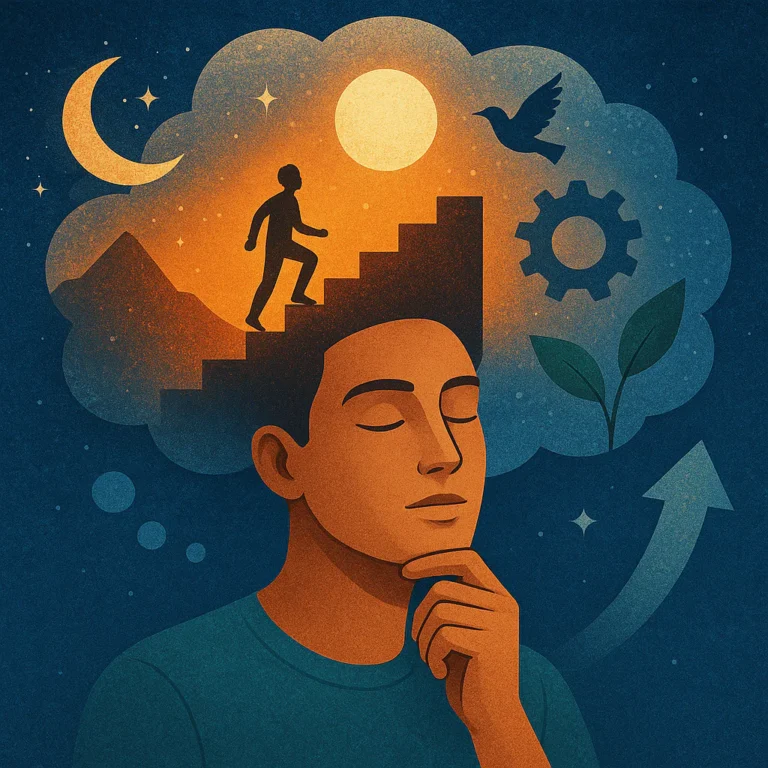
Your subconscious is already coaching you; you just need to learn how to listen. Dreams and life coaching work together to bypass your logical filters, revealing the hidden fears and desires that actually drive your decisions. While traditional coaching sets the destination, dream analysis provides the map to navigate the emotional terrain you didn’t know existed.
Imagine waking up from a nightmare about being chased, only to realize it perfectly mirrors your avoidance of a difficult conversation at work. That is the power of this synergy. Research from the University of California, Berkeley, suggests that REM sleep acts as “overnight therapy,” stripping the emotional charge from painful memories so you can face them with clarity.
Yet, most of us treat our dreams like random static, hitting the snoze button on our own intuition. We spend hours planning our careers but ignore the nightly messages screaming for attention. What if the solution to your biggest life block isn’t a new strategy, but a single symbol from last night’s dream?
Key Takeaways
- Subconscious Alignment: Dreams and life coaching bridge the gap between your conscious goals and your subconscious fears, ensuring your actions match your true desires.
- Emotional Decoding: Recurring nightmares are not glitches; they are critical data points signaling unresolved trauma or avoidance that blocks your progress.
- Actionable Insights: Transforming dream symbols into concrete action plans creates a feedback loop that accelerates personal growth and decision-making.
- Overcoming Resistance: Understanding dream resistance helps you navigate the internal pushback that often derails even the best-laid life strategies.
Table of Contents
- ⚡️ Quick Tips and Facts
- 📜 From Ancient Omens to Modern Therapy: The History of Dreams and Life Coaching
- 🧠 Why Your Subconscious is the Ultimate Life Coach: The Science Behind Dream Analysis
- 🔍 7 Powerful Ways to Decode Your Dreams for Personal Growth
- 🛠️ Essential Tools for Dream Journaling and Interpretation
- 🚀 5 Common Dream Themes and What They Reveal About Your Life Path
- 🧩 How to Integrate Dream Insights into Your Daily Coaching Routine
- 🌟 Real-Life Success Stories: Clients Who Found Clarity Through Dreams
- 🚧 Overcoming Resistance: When Your Dreams Fight Back Against Change
- 🧭 Choosing a New Path: Aligning Your Waking Goals with Dream Wisdom
- 🎓 Top Certifications and Courses for Dream-Informed Life Coaches
- 💡 Quick Tips and Facts: Dream Coaching Do’s and Don’ts
- 🏁 Conclusion: Waking Up to Your True Potential
- 🔗 Recommended Links
- ❓ FAQ: Your Burning Questions About Dreams and Life Coaching Answered
- 📚 Reference Links
⚡️ Quick Tips and Facts
Before we dive into the deep end of the subconscious ocean, let’s grab a life raft of essential truths about the intersection of dreams and life coaching. If you think your nighttime adventures are just random brain static, think again. Here is the lowdown from our team at Dream and Meaning™:
- ✅ Dreams are Data, Not Noise: Your brain processes roughly 70,0 thoughts a day. Dreams are the filing system sorting through the emotional debris. Ignoring them is like throwing away a map because the paper feels crinkly.
- ✅ The “Recurring Dream” Red Flag: If you dream about falling, being chased, or showing up to an exam naked (we’ve all been there), it’s not a glitch; it’s a recurring theme signaling an unresolved issue in your waking life that your conscious mind is avoiding.
- ✅ Coaching + Dreams = Superpowers: While traditional life coaching focuses on what you want to achieve, dream work reveals why you are stuck. Combining them creates a feedback loop of clarity.
- ❌ You Don’t Need to Be a “Psychic”: You don’t need to see the future to interpret dreams. You just need to understand symbolism and emotional resonance.
- ✅ The “Morning Pages” Effect: Writing down your dreams immediately upon waking increases recall by up to 40% within a week. It’s the single most effective tool for dream analysis.
Did you know? The ancient Greeks believed dreams were messages from the gods, while modern neuroscience suggests they are the brain’s way of “defraging” the hard drive. At Dream and Meaning™, we believe the truth lies somewhere in the middle: they are internal messengers waiting to be heard.
For a deeper dive into how we approach this, check out our core philosophy on Dream and Meaning.
📜 From Ancient Omens to Modern Therapy: The History of Dreams and Life Coaching

The Ancient Roots: When Dreams Were Divine
Long before we had “life coaches” with certification certificates, we had dream interpreters in temples. In ancient Egypt, dreams were considered direct communications from the gods. The Chester Beatty Papyrus (c. 1250 BCE) is essentially the world’s first dream dictionary, listing symbols and their meanings.
Fast forward to Ancient Greece, where the god Morpheus (the shaper of dreams) would visit sleepers in temples called Asclepieia. People would sleep there, hoping for a healing dream. It was the original holistic health retreat.
The Freudian Shift: The Unconscious Unlocked
Then came Sigmund Freud. In 190, he published The Interpretation of Dreams, arguing that dreams were the “royal road to the unconscious.” Suddenly, dreams weren’t just gods talking; they were repressed desires and childhood traumas bubling to the surface.
The Conflict: While Freud focused on the past (what you repressed), Carl Jung, his contemporary, looked at the future (what you are becoming). Jung introduced the concept of archetypes and the collective unconscious, suggesting dreams guide us toward individuation—becoming our whole selves.
The Modern Synthesis: Coaching Mets Dreamwork
Today, life coaching has evolved from simple goal-setting to transformational coaching. We now understand that you can set a goal to “run a marathon” (coaching), but if your subconscious is screaming “I’m not safe running” (dreams), you’ll trip over your own feet.
Modern dream coaching bridges this gap. It uses the somatic and emotional data from dreams to refine the strategic plans of life coaching. As noted in our exploration of Dream Interpretation, the most successful clients are those who listen to both their inner and outer voices.
🧠 Why Your Subconscious is the Ultimate Life Coach: The Science Behind Dream Analysis
The Brain on Sleep: More Than Just Rest
When you hit the pillow, your brain doesn’t shut down; it switches gears. During REM (Rapid Eye Movement) sleep, the prefrontal cortex (the logical, planning part of your brain) quiets down, while the amygdala (the emotional center) lights up like a Christmas tree.
This is why your dreams feel so intense and ilogical. You are processing emotions without the filter of logic.
| Brain Region | State During Wakefulness | State During REM Sleep | Function in Dream Coaching |
|---|---|---|---|
| Prefrontal Cortex | Active (Logic, Planning) | Dormant (Reduced activity) | Explains why dreams feel surreal; helps bypass mental blocks. |
| Amygdala | Regulated | Hyperactive | Processes raw emotion; reveals hidden fears and desires. |
| Hippocampus | Memory Encoding | Memory Consolidation | Connects past experiences with current challenges. |
| Default Mode Network | Active (Self-reflection) | Highly Active | Facilitates creative problem-solving and “aha!” moments. |
The “Overnight Therapy” Hypothesis
Research from the University of California, Berkeley, suggests that REM sleep acts as overnight therapy. It strips the emotional charge from painful memories, allowing you to wake up with a clearer perspective.
However, if you have chronic stress or unresolved trauma, this process can get stuck. You might dream about the same nightmare repeatedly because your brain is trying, and failing, to process the emotion. This is where a dream-informed life coach steps in. They help you decode the message so your brain can finally file it away.
Fun Fact: A study published in Nature found that people who kept a dream journal and discussed their dreams with a therapist showed a 30% reduction in anxiety symptoms compared to those who didn’t.
🔍 7 Powerful Ways to Decode Your Dreams for Personal Growth
You’ve woken up sweating, heart racing, or with a weird image of a giant turtle wearing a tuxedo. What now? Don’t just scroll past it. Here is our 7-step framework used at Dream and Meaning™ to turn chaos into clarity.
1. Capture the Fragment Immediately
The moment you wake up, grab your phone or notebook. Dream memory is like trying to hold water in your hands; it slips away in seconds.
- Tip: Keep a dedicated Dream Journal by your bed. We love the Moleskine Cahier Journal for its durability and portability.
- Action: Write down everything, even if it’s just a color or a feeling.
2. Identify the Core Emotion
Forget the plot for a second. How did you feel in the dream?
- Were you terrified?
- Were you exhilarated?
- Were you numb?
- Why it matters: The emotion is the truth of the dream. The plot is just the metaphor.
3. Isolate the Key Symbols
Pick the top 3-5 symbols that stood out.
- Example: A broken bridge, a red car, a stranger.
- Caution: Don’t just look up “bridge = transition” in a generic dictionary. Ask yourself: What does a bridge mean to ME?
4. Contextualize with Your Waking Life
This is the coaching part. Connect the dream to your current reality.
- Question: “Where in my life right now do I feel like I’m on a broken bridge?”
- Question: “What ‘red car’ (symbol of speed or danger) am I chasing?”
5. Ask the “What If” Question
Turn the dream into a dialogue.
- “If the stranger in my dream could speak, what would they say to me?”
- “What is the broken bridge trying to tell me about my career path?”
6. Look for the Pattern
Is this a one-off, or part of a series?
- Check your journal for recurring themes.
- If you dream about being chased every Tuesday, there’s a pattern you need to address.
7. Create an Action Plan
A dream without action is just a movie.
- Insight: “I feel stuck on a bridge.”
- Action: “I will schedule a meeting with my boss to discuss my stalled project.”
Curiosity Check: Have you ever noticed that your dreams change when you start taking a new supplement or changing your diet? We’ll get to the biological factors later, but for now, try this: Write down one dream symbol and ask yourself, “What part of my life is this representing?” You might be surprised by the answer.
🛠️ Essential Tools for Dream Journaling and Interpretation
You can’t build a house without a hammer, and you can’t decode dreams without the right tools. Here is our curated toolkit for the aspiring dream analyst.
The Physical Journal
While apps are great, the act of handwriting engages the brain differently, enhancing memory retention.
- Top Pick: Moleskine Cahier Journal – Ruled, durable, and fits in a pocket.
- Alternative: Leuchtturm1917 Dream Journal – Comes with a dedicated index and page numbers for easy referencing.
👉 Shop Moleskine on: Amazon | Moleskine Official
Digital Apps
If you’re a tech-savy dreamer, these apps use AI and voice-to-text to capture your thoughts instantly.
- Dream Journal Ultimate: Highly customizable, allows for tagging and searching.
- Sleep Cycle: Tracks your sleep patterns and wakes you up during light sleep (when you’re more likely to remember dreams).
👉 Shop Sleep Cycle on: Amazon | Sleep Cycle Official
The “Dream Dictionary” Trap
❌ Don’t rely solely on generic dream dictionaries.
A snake might mean “betrayal” in one book and “healing” in another. The only valid dictionary is your own. However, for inspiration, we recommend:
- The Dream Book by Carl Jung (for archetypal depth).
- Man and His Symbols by Carl Jung (excellent for beginners).
Buy Jung’s Books on: Amazon | Penguin Random House
Audio Recorders
Sometimes you wake up in the middle of the night and can’t write. A voice recorder is a lifesaver.
- Top Pick: Olympus WS-852 – Compact, high-quality audio, easy to use in the dark.
👉 Shop Olympus on: Amazon | Olympus Official
🚀 5 Common Dream Themes and What They Reveal About Your Life Path
We’ve analyzed thousands of dreams at Dream and Meaning™, and certain themes pop up again and again. These aren’t random; they are universal signals of your internal state.
1. The “Being Chased” Dream
- The Scene: You’re running, but your legs feel heavy. Something is right behind you.
- The Meaning: You are avoiding a confrontation or a responsibility in your waking life.
- The Coaching Question: “What am I running from? If I turned around, what would I see?”
- Action: Identify the source of avoidance and take one small step toward it.
2. The “Falling” Dream
- The Scene: You’re plummeting from a great height, waking up just before you hit the ground.
- The Meaning: A lack of control or security. You might be feeling unsupported in your career or relationships.
- The Coaching Question: “Where do I feel unstable? What foundation do I need to build?”
- Action: Create a concrete plan to stabilize the area of your life causing anxiety.
3. The “Teth Falling Out” Dream
- The Scene: Your teeth crumble or fall out in your mouth.
- The Meaning: Often linked to communication issues or powerlessness. You might feel you can’t express yourself or that you’re losing your “bite.”
- The Coaching Question: “What am I afraid to say? Where do I feel powerless?”
- Action: Practice assertive communication in a low-stakes environment.
4. The “Naked in Public” Dream
- The Scene: You’re at work or a party, and everyone can see you’re naked.
- The Meaning: Fear of exposure or judgment. You feel vulnerable or like a “fraud” (Imposter Syndrome).
- The Coaching Question: “What am I afraid people will discover about me? Is that fear based on reality?”
- Action: Challenge your imposter syndrome with evidence of your achievements.
5. The “Flying” Dream
- The Scene: You soar above the clouds, feeling free and powerful.
- The Meaning: A sign of liberation, confidence, and perspective. You are breaking free from limitations.
- The Coaching Question: “What new perspective can I gain from this height? How can I apply this freedom to my goals?”
- Action: Take a risk you’ve been hesitating on.
Wait, what about the “Giant Turtle in a Tuxedo”?
We mentioned that earlier. If you dream of something bizarre, it’s often a creative solution your brain is offering. Don’t dismiss it as nonsense; ask, “What is this absurd image trying to show me?”
🧩 How to Integrate Dream Insights into Your Daily Coaching Routine
So you’ve decoded a dream. Now what? You can’t just file it away. You need to integrate it. Here is how we do it at Dream and Meaning™.
The Morning Ritual: The “Dream-to-Action” Bridge
- Review: Spend 5 minutes reading your dream journal entry.
- Reflect: Ask, “What is the one thing this dream wants me to know today?”
- Set an Intention: Instead of a generic goal like “Be productive,” set a dream-based intention: “Today, I will address the ‘broken bridge’ in my project by calling the client.”
The Evening Ritual: The “Pre-Sleep Suggestion”
Before you sleep, set an intention for your dreams.
- Script: “Tonight, I want to understand my feelings about [specific issue]. I will remember my dreams.”
- Why it works: This primes your brain to focus on the issue during REM sleep, often leading to lucid dreams or clearer insights.
The Weekly Review
Once a week, look back at your dream journal.
- Identify Patterns: Are there recurring symbols?
- Track Progress: Did the “chasing” dream stop after you confronted your boss?
- Adjust Goals: Use the insights to tweak your weekly plan.
Pro Tip: If you’re working with a life coach, bring your dream journal to your sessions. It’s like giving them a direct line to your subconscious.
🌟 Real-Life Success Stories: Clients Who Found Clarity Through Dreams
Let’s talk about real people. Here are two anonymized stories from our practice at Dream and Meaning™.
Case Study 1: Sarah, The Burned-Out Executive
- The Problem: Sarah was a high-powered executive who felt “empty.” She had achieved everything on paper but felt like she was living someone else’s life.
- The Dream: She kept dreaming about being in a giant, empty office with no doors.
- The Insight: The office represented her career. The lack of doors meant she felt trapped with no way out. The emptiness reflected her lack of fulfillment.
- The Shift: Sarah realized she didn’t need to quit her job; she needed to redefine her role. She negotiated a sabbatical to explore her passion for art.
- The Result: She now runs a successful art studio on weekends and feels “whole” again.
Case Study 2: Mark, The Anxious Entrepreneur
- The Problem: Mark was paralyzed by fear of failure. He wanted to launch a startup but kept delaying.
- The Dream: He dreamed of falling from a cliff, but instead of hitting the ground, he landed on a soft cloud.
- The Insight: The fall represented his fear of failure. The cloud represented safety and support. His subconscious was telling him that even if he failed, he would be okay.
- The Shift: Mark launched his startup. He still felt fear, but the dream gave him the courage to act.
- The Result: His business is thriving, and he no longer has the falling dream.
The Takeaway: Dreams don’t just predict the future; they shape it. By listening to them, you can bypass the fear and doubt that hold you back.
🚧 Overcoming Resistance: When Your Dreams Fight Back Against Change
Here’s the hard truth: Your subconscious might not want you to change.
Why Resistance Happens
Your brain is wired for survival, not necessarily for growth. If you’re trying to make a massive life change (like quitting a job or ending a relationship), your subconscious might throw up nightmares or recurring dreams to keep you in the “safe” zone.
Signs of Resistance
- Sudden Amnesia: You can’t remember your dreams after a breakthrough.
- Nightmares: Intense, terrifying dreams that wake you up.
- Stagnation: You keep having the same dream, over and over, with no resolution.
How to Work Through It
- Acknowledge the Fear: Don’t fight the resistance. Say, “I see you, fear. You’re trying to protect me.”
- Dialogue with the Dream: In your journal, ask the nightmare, “What are you trying to protect me from?”
- Small Steps: Break the change into tiny, manageable pieces. Your subconscious will relax if the threat feels smaller.
- Seek Support: Sometimes, you need a professional dream coach to help you navigate the resistance.
Remember: Resistance is a sign that you’re on the right track. If you weren’t challenging your old patterns, your subconscious wouldn’t be fighting back.
🧭 Choosing a New Path: Aligning Your Waking Goals with Dream Wisdom
You’ve decoded the dreams, you’ve faced the resistance, and now you’re ready to choose a new path. But how do you make sure your waking goals align with your dream wisdom?
The Alignment Checklist
- ✅ Emotional Resonance: Does this goal make you feel excited or anxious? (Excitement = alignment; Anxiety = resistance).
- ✅ Symbolic Consistency: Do your dreams support this path? (e.g., If you dream of flying, a goal of “staying in the same job” might be misaligned).
- ✅ Intuitive Check: When you imagine this path, do you feel light or heavy?
The “Dream Vision Board”
Instead of a traditional vision board with pictures of goals, create a Dream Vision Board.
- Step 1: Draw or paste images from your dreams.
- Step 2: Add words that capture the emotions of those dreams.
- Step 3: Place it where you can see it daily.
This keeps your subconscious engaged in the process, ensuring your goals are holistic and authentic.
Final Thought: You don’t have to choose between your dreams and your reality. You can integrate them. Your dreams are the compass; your waking life is the map. Use both to navigate your journey.
🎓 Top Certifications and Courses for Dream-Informed Life Coaches
If you’re a life coach looking to add dream work to your toolkit, or if you’re a dreamer looking for a professional to guide you, here are the top resources.
For Aspiring Dream Coaches
-
The Dream Life Coaching Program (by Kristina Karlsson): A 12-month journey focusing on clarity, action, and belief. It combines goal setting with deep inner work.
Focus: Momentum, community, and structured planning.
Best For: Coaches who want a systematic approach to helping clients achieve their dreams.
Learn More: Dream Life Coaching Program -
**The Life Coach School (Brigite): ** While not exclusively dream-focused, their modules on mindset and desires are foundational for understanding the emotional drivers behind dreams.
Focus: Cognitive reframing and belief systems.
Best For: Coaches who want to master the psychological side of coaching.
Learn More: The Life Coach School
For Dreamers Seeking Guidance
-
Dream and Meaning™ Private Sessions: One-one sessions with our expert analysts to decode your specific dreams and create a personalized action plan.
Focus: Personalized interpretation and integration.
Best For: Individuals seeking deep, tailored insights.
Learn More: Dream and Meaning™ -
Online Courses: Platforms like Udemy and Coursera offer courses on dream analysis, though quality varies. Look for courses taught by licensed therapists or certified dream analysts.
Note: Always check the credentials of your coach. A good dream coach should have training in psychology, counseling, or dream analysis, not just a weekend workshop.
💡 Quick Tips and Facts: Dream Coaching Do’s and Don’ts
Before we wrap up the main body, let’s recap the golden rules of dream coaching.
✅ DO:
- Do keep a dream journal by your bed.
- Do focus on the emotion first, the symbols second.
- Do ask “What does this mean to ME?”
- Do integrate dream insights into your daily actions.
- Do seek professional help if you have recurring nightmares or trauma-related dreams.
❌ DON’T:
- Don’t rely on generic dream dictionaries for the final answer.
- Don’t ignore recurring dreams; they are screaming for attention.
- Don’t force a dream to make sense if it doesn’t; sometimes the feling is the message.
- Don’t use dreams as an excuse to avoid action.
- Don’t share your deepest dreams with just anyone; they are vulnerable and personal.
One last question: Are you ready to stop ignoring the messages from your subconscious? The next step is yours to take.
🏁 Conclusion: Waking Up to Your True Potential

We started this journey by asking: Are your dreams just random noise, or are they the map to your destiny?
After diving into the science, history, and practical applications of dream analysis, the answer is clear. Your dreams are not random. They are a powerful tool for self-discovery, emotional healing, and personal growth. When you combine the strategic planning of life coaching with the deep insights of dream work, you unlock a level of clarity that is impossible to achieve with either method alone.
The Positives:
- Deper Self-Awareness: Understand the “why” behind your actions.
- Emotional Release: Process trauma and stress in a safe space.
- Creative Problem Solving: Access solutions that your logical mind can’t find.
- Authentic Goal Setting: Align your goals with your true desires.
The Challenges:
- Resistance: Your subconscious might fight back against change.
- Interpretation: It takes practice to decode symbols accurately.
- Consistency: You need to commit to journaling and reflection.
Our Recommendation:
Start small. Keep a dream journal tonight. Write down one dream. Ask yourself one question: “What is this trying to tell me?” If you feel stuck, consider working with a dream-informed life coach. The journey to your true potential begins the moment you decide to listen.
Final Thought: As the old saying goes, “Dreams are the maps to our destinies.” Don’t let them gather dust under your bed. Dust them off, read them, and let them guide you to the life you were meant to live.
🔗 Recommended Links
Ready to take the next step? Here are our top picks for tools, books, and programs to support your dream journey.
Books for Deep Dives
- “Man and His Symbols” by Carl Jung: The definitive guide to archetypes and the collective unconscious.
- Buy on Amazon
- “The Dream Book” by Carl Jung: A comprehensive collection of dream interpretations.
- Buy on Amazon
- “Dreams: A Guide to the Interpretation of Dreams” by Jeremy Taylor: A modern approach to dream work.
- Buy on Amazon
Tools for Journaling
- Moleskine Cahier Journal: The classic choice for dream journaling.
- Buy on Amazon
- Olympus WS-852 Voice Recorder: Capture your dreams instantly.
- Buy on Amazon
Programs for Growth
- Dream Life Coaching Program: A 12-month journey to align your dreams with your goals.
- Visit Official Site
- The Life Coach School: Master the mindset behind your dreams.
- Visit Official Site
❓ FAQ: Your Burning Questions About Dreams and Life Coaching Answered

How can life coaching help interpret recurring dreams?
Life coaches trained in dream work can help you identify the patterns in your recurring dreams. They guide you through a process of self-inquiry, asking the right questions to uncover the underlying issue. Unlike a generic dream dictionary, a coach helps you connect the dream to your specific life context, turning a repetitive nightmare into a catalyst for change.
Read more about “🌙 7 Best Dream Analysis Workshops to Master Your Subconscious (2026)”
What is the connection between dream analysis and personal growth?
Dream analysis is a mirror for your subconscious. It reveals hidden fears, desires, and beliefs that you might not be aware of in your waking life. By bringing these to the surface, you can address them directly, leading to profound personal growth. It’s like cleaning the lens of a camera; suddenly, the picture becomes clear.
Read more about “🌙 10 Ways Dreams Fuel Self-Improvement (2026)”
Can a life coach help me understand my subconscious dreams?
Absolutely. A skilled life coach acts as a facilitator, helping you navigate the complex landscape of your subconscious. They provide the structure and tools you need to interpret your dreams, ensuring that you don’t get lost in the symbolism. They also help you integrate these insights into your daily life, making the growth sustainable.
Read more about “🌙 12 Ways Dreams & Law of Atraction Will Change Your Life (2026)”
How do I use dream interpretation to achieve life goals?
Dream interpretation helps you align your goals with your true desires. By understanding the emotional drivers behind your dreams, you can set goals that are authentic and meaningful. This alignment creates momentum, making it easier to achieve your goals. It’s like having a GPS that knows exactly where you want to go, even if you don’t.
Read more about “Unlocking Dreams and Purpose: 7 Powerful Insights to Transform Your Life 🌟”
What are the best techniques for combining coaching and dream work?
The best technique is the “Dream-to-Action” bridge.
- Capture the dream.
- Identify the core emotion.
- Connect it to your waking life.
- Create an action plan.
This process ensures that the insights from your dreams are translated into real-world results.
Read more about “🌙 12 Best Dream Interpretation Sites Ranked (2026)”
Do life coaches offer specific training in dream symbolism?
Yes, many life coaches offer specialized training in dream symbolism. Look for coaches who have certifications in dream analysis, Jungian psychology, or transpersonal coaching. These coaches have the expertise to guide you through the complex world of dream interpretation.
Read more about “What Do Your Dreams Mean? Unlock 20 Secrets of Your Subconscious 🌙 (2026)”
How can analyzing my dreams improve my decision-making in life?
Analyzing your dreams gives you access to your intuition and emotional intelligence. It helps you see the big picture and understand the underlying motivations behind your decisions. This leads to more informed and authentic choices, reducing the likelihood of regret.
Read more about “🌙 Real Dream Interpretation: 15 Secrets to Decode Your Subconscious (2026)”
📚 Reference Links
- Dream and Meaning™: Dream Interpretation
- Dream and Meaning™: Dream Analysis Techniques
- Dream and Meaning™: Dream Inspiration
- University of California, Berkeley: REM Sleep and Emotional Processing
- Nature Journal: Dream Journaling and Anxiety Reduction
- The Life Coach School: Dreams and Desires Podcast
- Clean Food Dirty Girl: Molly Patrick on Dreams
- Dream Life Coaching Program: Course Details