Support our educational content for free when you buy through links on our site. Learn more
Dreams and Transcendence: What Your Mind May Be Showing You 🌌

Dreams and transcendence can feel profoundly spiritual, expansive, or life-changing—but the experience alone cannot prove a supernatural message or predict the future. The most helpful approach is to honor what the dream meant to you, then explore its emotions, personal associations, and waking-life context with an open mind.
A dream of soaring through a stary sky might leave one person peaceful and another unsettled. Even familiar themes vary: a survey-based overview discussed by dream researcher Kelly Bulkeley found reports of deceased loved ones in dreams across several populations, but those experiences do not have one universal meaning.
So what might a transcendent dream be asking you to notice? Start not with a dream dictionary, but with the feeling you carried into the morning.
Key Takeaways
- Transcendent dreams may involve awe, connection, spiritual imagery, flying, light, or a changed sense of self.
- There’s no single correct interpretation. Your emotions, memories, culture, and life circumstances matter.
- A powerful dream is not proof of prophecy or supernatural contact. You can value its personal meaning while staying grounded.
- Dream journaling can help: record the images, emotions, personal associations, and possible interpretations.
- Seek support if recurring dreams cause ongoing distress, disrupt sleep, or affect your day-to-day life.
Table of Contents
- ⚡️ Quick Tips and Facts About Dreams and Transcendence
- 🌌 What Does Transcendence Mean in a Dream?
- Transcendence, Spirituality, and the Dreaming Mind
- How Transcendent Dreams Differ From Lucid or Vivid Dreams
- 📜 Background: Transcendent Dreams Across Cultures and History
- Dreams in Religious and Spiritual Traditions
- Modern Psychology and the Study of Extraordinary Dreams
- ✨ Common Themes in Dreams of Transcendence
- Flying, Floating, and Leaving the Body
- Light, Vast Landscapes, and Feelings of Oneness
- Meeting Spiritual Figures or Departed Loved Ones
- Death, Rebirth, and Transformation
- 🔍 What Transcendent Dreams May Mean
- Psychological Interpretations: Identity, Emotion, and Personal Growth
- Spiritual Interpretations: A Personal, Non-Literal Perspective
- How Culture and Beliefs Shape Dream Meaning
- 🧠 What Science Says About Transcendent Dream Experiences
- Sleep Stages, REM Sleep, and Intense Dream Emotion
- Dreams, Memory, and the Sense of Self
- What Research Can—and Cannot—Tell Us
- 🪞 How to Interpret a Transcendent Dream
- Questions to Ask About the Dream
- A Step-by-Step Dream Journaling Method
- Finding Meaning Without Treating Dreams as Predictions
- 🌱 Using Transcendent Dreams for Reflection and Personal Growth
- Creative Reflection, Meditation, and Mindfulness
- Turning Dream Insights Into Grounded Actions
- 🌙 How to Encourage Meaningful Dream Recall
- Sleep Habits That Support Dream Recall
- Dream Journals, Prompts, and Gentle Reflection
- ⚠️ When a Dream Fels Frightening or Disruptive
- Distinguishing a Powerful Dream From a Sleep or Mental Health Concern
- When to Seek Professional Support
- ✅ Conclusion
- 🔗 Recommended Links
- ❓ FAQ
- Are transcendent dreams real spiritual experiences?
- Can a dream of transcendence predict the future?
- Why do transcendent dreams feel more vivid than ordinary dreams?
- What does it mean to feel connected to everything in a dream?
- Can meditation or stress affect transcendent dreams?
- Should I be worried if I keep having the same transcendent dream?
- 📚 Reference Links
Quick Tips and Facts About Dreams and Transcendence
Quick answer: A transcendent dream is a dream that feels as if it reaches beyond ordinary experience—through awe, profound connection, spiritual imagery, unusual clarity, or a changed sense of self. That feeling can be meaningful without proving that the dream came from a supernatural source.
For more on how we approach dreams at Dream and Meaning™, start with Dream and Meaning and explore our Dream Interpretation guides.
| Quick fact | What it may mean for you |
|---|---|
| “Transcendent” describes an experience, not a diagnosis. | The dream may feel sacred, expansive, or beyond the everyday, but there is no single universal interpretation. |
| Emotion is a useful clue. | Notice whether the dream left you peaceful, frightened, connected, awestruck, or unsettled. |
| Common themes include flying, light, vastness, death and rebirth, and encounters with deceased loved ones. | These images can connect with personal memories, beliefs, grief, freedom, or change. |
| A powerful dream is not proof of a prediction or supernatural event. | Treat it as an invitation to reflect rather than an instruction you must obey. |
| Dream recall varies. | Keeping a journal by your bed and writing immediately after waking can help preserve details before they fade. |
| Repetition can be worth exploring. | Recurring imagery may reflect a concern or emotion that remains salient, but it does not carry a fixed meaning. |
✅ Try this: Write down what happened, how you felt, and what in waking life currently carries a similar emotional tone. ❌ Avoid: Making major decisions based on a dream alone or treating a dream dictionary as a decoder ring.
Dream researchers and clinicians do not always agree about what dreams are “for.” We can still take a balanced view: sleep science helps explain dreaming, while personal reflection can help you explore what a dream means to you. The question that makes a transcendent dream especially compelling is not only “What did I see?” but “What changed in how I felt?” We’ll return to that distinction when we explore interpretation.
🌌 What Does Transcendence Mean in a Dream?
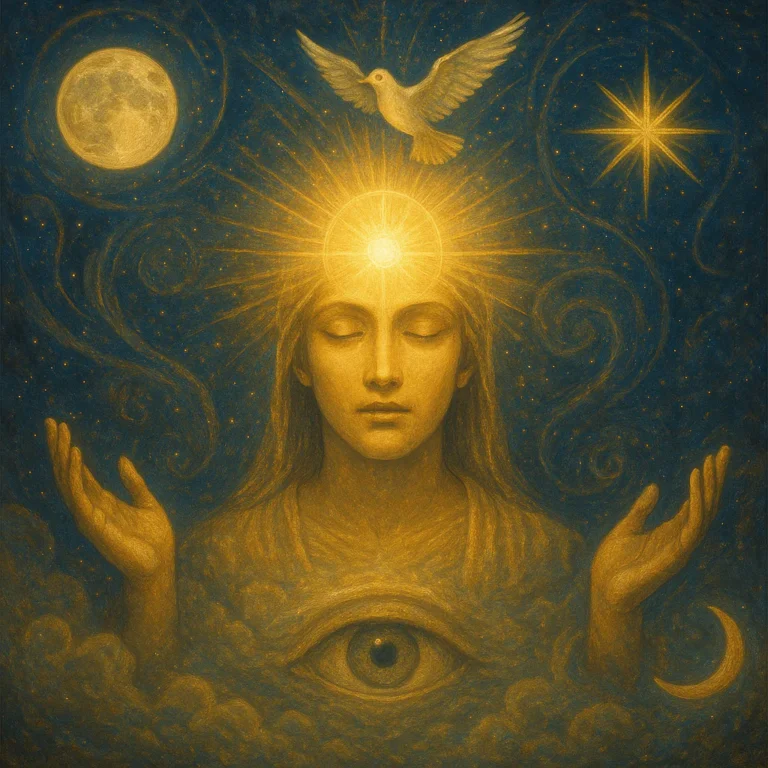
In ordinary language, transcendence means going beyond usual limits or experience. In a dream, the word often describes a felt sense of vastness, unity, spiritual importance, freedom, or contact with something larger than the everyday self.
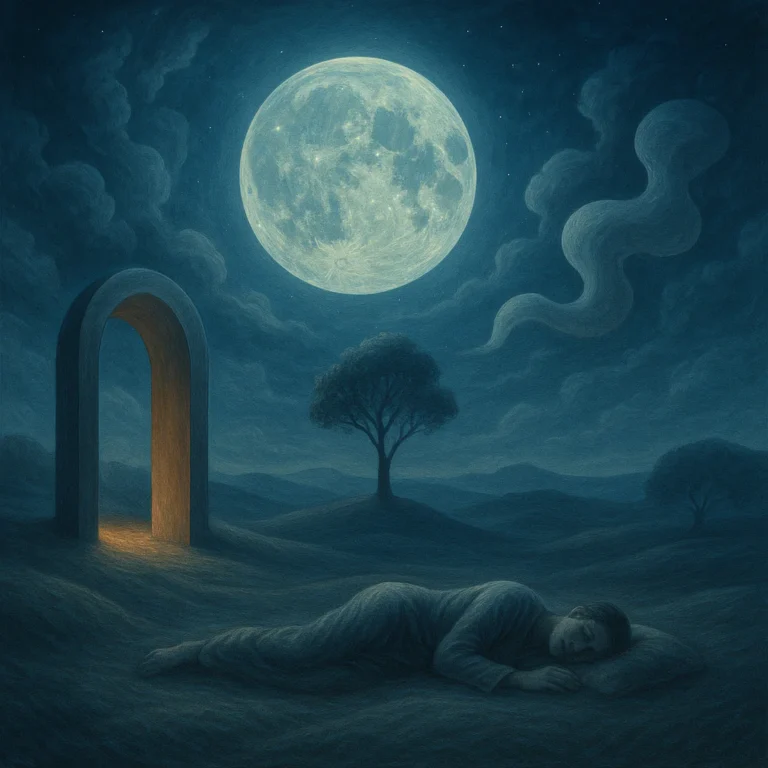
That is a description of the dreamer’s experience—not a verdict about its cause. Two people can dream of the same image, such as a bright doorway, and experience it in completely different ways. One might feel comforted; another might feel afraid. The emotion and personal context matter more than a symbol’s supposed universal definition.
Transcendence, Spirituality, and the Dreaming Mind
A transcendent dream may prompt questions about life, death, identity, the sacred, or what lies beyond ordinary perception. That does not mean every such dream is religious, or that spiritual interpretations are the only valid ones. A psychological reading, a spiritual reading, and a sleep-science explanation can coexist—as long as we do not present an interpretation as proven fact.
Psychologist and dream researcher Kelly Bulkeley argues in Psychology Today that dreams can naturally raise spiritual and existential questions. He describes them as “metaphysically insistent, but not dogmatic”: they can invite reflection without settling what a person should believe.
That distinction is useful. A dream can feel like a message without giving us reliable evidence that it came from an external source. You can honor the experience while keeping your conclusions open.
How Transcendent Dreams Differ From Lucid or Vivid Dreams
A dream can be lucid, vivid, emotionally intense, or transcendent—and these qualities are not interchangeable.
| Dream quality | What it usually describes | Example |
|---|---|---|
| Vivid | The dream feels unusually clear or sensory-rich. | You remember colors, sounds, and details after waking. |
| Lucid | You realize you are dreaming while the dream is happening. | You notice the dream is not waking reality and may choose what to do. |
| Transcendent | The dream feels expansive, sacred, deeply connected, or beyond ordinary experience. | You feel a powerful sense of unity while floating through a star-filled sky. |
| Nightmare | The dream causes fear or distress, often during or after the experience. | You are chased or trapped and wake feeling alarmed. |
A lucid dream is not automatically transcendent, and a transcendent dream does not require dream control. If you realize you are dreaming and then feel a strong sense of awe or connection, the experience may have both qualities.
📜 Background: Transcendent Dreams Across Cultures and History

People across cultures have treated dreams as sources of reflection, warning, inspiration, spiritual communication, ordinary mental activity. The meaning assigned to a dream depends partly on the dreamer’s culture, community, and beliefs. There is no single interpretation that applies everywhere.
Some religious traditions include accounts of dreams as divine messages; other traditions emphasize ritual, ancestors, or communal interpretation. In modern psychology, dreams are also studied in relation to memory, emotion, and sleep. These perspectives ask different questions, so their explanations can differ without one automatically disproving the others.
Dreams in Religious and Spiritual Traditions
A dream of meeting a deceased relative, receiving guidance, or entering a radiant landscape may feel sacred to the person who experienced it. A spiritual community may interpret it through its own teachings; a family may understand it as part of grieving; another person may regard it as a vivid dream shaped by memory.
We recommend beginning with the dreamer’s own frame of reference. Ask what the images mean within their tradition and life, rather than assuming that one symbol carries the same meaning for everyone.
The Encyclopaedia Britannica overview of dreams provides background on the long history of dream interpretation. Historical accounts are evidence of how people have understood dreams—not scientific proof that a particular dream predicts the future or comes from a supernatural source.
Modern Psychology and the Study of Extraordinary Dreams
Modern dream research generally distinguishes between describing a dream experience and explaining its ultimate cause. A dream report can document what someone remembers and feels. Establishing why the dream happened—or whether it has a spiritual origin—is a much more difficult question.
In the Psychology Today article on dreaming and spirituality, Bulkeley summarizes surveys in which 38%–73% of respondents across several populations reported at least one dream involving a deceased person. He also reports that flying dreams were commonly remembered across the groups discussed.
Those figures come from surveys conducted in different years and populations. They are not a single modern, globally representative estimate, and they do not establish what such dreams mean. They do show why visitation and flying dreams are familiar topics in discussions of spiritual and emotional experience.
✨ Common Themes in Dreams of Transcendence
Transcendence is not a set of symbols with fixed definitions. Rather, certain themes can accompany feelings of awe, freedom, connection, or transformation. Use the table below as a set of reflection prompts, not a lookup chart with one “correct” answer.
| Dream image or theme | Possible personal associations | Helpful reflection question |
|---|---|---|
| Flying or floating | Freedom, perspective, escape, play, or vulnerability | Did you feel empowered, peaceful, or out of control? |
| Bright light or a doorway | Hope, clarity, attention, transition, or fear | What did the light invite—or make you avoid? |
| Vast space or the cosmos | Awe, smallness, possibility, uncertainty, or connection | Did the vastness feel welcoming or overwhelming? |
| A deceased loved one | Grief, memory, comfort, unfinished conversations, or spiritual belief | What did the encounter mean in your own family or faith context? |
| Death and rebirth | Change, endings, new roles, or anxiety about loss | What is changing, ending, or beginning in your life? |
Flying, Floating, and Leaving the Body
Flying dreams can feel exhilarating, liberating, or startlingly real. In Bulkeley’s discussion of dream surveys, reported flying dreams appeared across several populations, though rates varied by group and study. These findings tell us that flying dreams are familiar—not that every flying dream means the same thing.
Ask what the flight felt like. Soaring with control may bring to mind confidence or possibility. Being unable to land may feel more like uncertainty or instability. Floating outside your body can occur as a dream sensation; the experience alone does not prove that consciousness literally left the body.
Light, Vast Landscapes, and Feelings of Oneness
A sunlit doorway, endless ocean, mountain peak, or star-filled universe can make a dream feel larger than everyday life. But imagery is personal: the ocean might mean peace to one person and danger to another.
Try separating what you saw from what you felt:
- Describe the image as plainly as possible.
- Name the strongest emotion.
- Recall whether the emotion changed during the dream.
- Connect it to a waking-life situation with a similar feeling.
- Keep more than one interpretation available.
That last step matters. “The light means hope” may be one possibility. “The light was simply part of a vivid scene” may also be true.
Meeting Spiritual Figures or Departed Loved Ones
Visitation dreams can feel especially convincing because the person may appear familiar, speak naturally, or seem unmistakably present. Bulkeley’s discussion of visitation dreams notes that these experiences have been reported in a range of surveyed populations. The experience can be emotionally meaningful whether the dreamer understands it spiritually, psychologically, or both.
If a dream brings comfort, you can value that comfort without needing to prove a supernatural explanation. If it brings distress, grief counseling or a trusted person may help you make room for the feelings it stirred up.
Death, Rebirth, and Transformation
Dreams involving death do not reliably predict a literal death. They may bring up fear, loss, change, or a symbolic ending—but sometimes the dream is simply strange or frightening. Likewise, a rebirth image may resonate with a new relationship, job, identity, or phase of life without serving as a prophecy.
A helpful starting question is: What is changing for me right now, and how do I feel about it? If nothing obvious comes to mind, do not force a symbolic explanation.
🔍 What Transcendent Dreams May Mean
Dream interpretation is strongest when it begins with the dreamer’s own associations rather than a universal codebook. We can consider several perspectives, then test them against the dream’s emotional tone and the dreamer’s life.
Psychological Interpretations: Identity, Emotion, and Personal Growth
A psychological approach might explore how a dream relates to memory, emotion, relationships, current stress, or a changing sense of identity. For instance, flying might connect with a recent feeling of freedom—or with a wish to escape pressure. Neither interpretation is guaranteed; the dreamer’s associations are the deciding context.
Use these prompts:
- What was the most emotionally intense moment?
- What in the dream felt familiar, and what felt strange?
- What has been taking up attention in waking life?
- Did the dream change how you saw a person or situation?
- What interpretation feels relevant without requiring you to ignore other evidence?
Dream work can support reflection, but it is not a substitute for mental-health care. If a dream triggers persistent distress or affects sleep, a licensed professional can help you address the impact.
Spiritual Interpretations: A Personal, Non-Literal Perspective
A spiritual interpretation may regard a dream as an invitation to contemplate compassion, mortality, purpose, connection, or faith. You do not have to choose between dismissing the dream and declaring it a supernatural message. “Meaningful to me” and “scientifically verified as externally caused” are different claims.
Bulkeley’s phrase “metaphysically insistent, but not dogmatic” captures a useful middle ground: a dream can pose a profound question without providing an authoritative answer. Treat spiritual meaning as a personal framework, and avoid letting a dream alone dictate medical, financial, or relationship decisions.
How Culture and Beliefs Shape Dream Meaning
A symbol’s meaning can vary by religion, family story, language, and personal experience. A bird might suggest freedom, a deceased relative, a warning, or simply a bird. Before interpreting, ask:
- Is this symbol important in my culture or tradition?
- What personal memories do I associate with it?
- Would someone I trust interpret it differently?
- Am I choosing an interpretation because it feels true—or because I fear what will happen if I reject it?
A balanced reading makes room for cultural meaning while avoiding claims that everyone must accept the same interpretation.
🧠 What Science Says About Transcendent Dream Experiences
Science can investigate dreaming, sleep, reports of dream content, and patterns of emotion. It cannot settle every philosophical or spiritual question about what a dream ultimately means. That boundary is not a weakness; it is a reminder to match our confidence to the evidence.
For a concise overview of sleep and dreaming, see the National Institute of Neurological Disorders and Stroke and the American Academy of Sleep Medicine.
Sleep Stages, REM Sleep, and Intense Dream Emotion
Dreams are associated with sleep, including REM sleep, but dreaming is not limited to one sleep stage. Remembered dreams can differ in vividness, story structure, and emotional intensity. A dream’s emotional force is not, by itself, evidence that it carries a supernatural message or predicts an event.
If you wake from an intense dream, record the experience before deciding what it “must” mean. Even a few notes—image, emotion, waking context—can help you reflect more carefully later.
Dreams, Memory, and the Sense of Self
Dreams can combine familiar people, memories, feelings, and unusual scenes in ways that seem convincing while we are asleep. A dream’s realism tells us about the experience of dreaming; it does not independently confirm that the events happened outside the dream.
This distinction is especially useful for dreams about leaving the body or meeting someone who has died. You can respect how real the experience felt while remaining open about how it arose.
What Research Can—and Cannot—Tell Us
| Research can help investigate… | Research does not automatically establish… |
|---|---|
| How people describe dreams and feelings | A universal meaning for a particular symbol |
| How sleep and dream recall relate | That a dream predicts a future event |
| How often reported themes occur in a surveyed group | That the same rate applies to everyone |
| Whether a dream is affecting mood or sleep | Whether its spiritual interpretation is objectively true |
When sources appear to disagree, check what question each source is answering. A spiritual account may explore personal significance; a sleep study may examine sleep patterns; a dream survey may count reported experiences. They are not necessarily competing explanations of the same kind.
The PhilArchive page supplied for this topic currently presents a verification screen rather than an accessible article text. We therefore cannot responsibly quote or summarize the unavailable paper. The accessible Psychology Today essay offers a perspective on existential reflection, but its interpretation should not be mistaken for a settled scientific consensus.
🪞 How to Interpret a Transcendent Dream
The best interpretation is not the most dramatic one. It is the one that helps you understand your experience without pretending to know more than the dream can show. If you’re looking for more methods, browse our Dream Analysis Techniques articles.
Questions to Ask About the Dream
Start with the dream itself, then connect it to life:
- What happened? Describe the scene without interpreting it.
- How did you feel? Name the emotion during the dream and after waking.
- What stood out? A person, image, sound, place, or turning point?
- What does that image mean to you personally?
- What is happening in your life that carries a similar feeling?
- What interpretation seems useful—and what evidence would challenge it?
If you cannot connect the dream to a waking-life issue, that is fine. Not every dream needs a grand meaning.
A Step-by-Step Dream Journaling Method
Try this method the next time a dream feels unusually powerful:
- Write immediately after waking. Record what you remember, even if it is only a fragment.
- Separate observation from interpretation. “I floated above the room” is an observation; “I escaped my problems” is an interpretation.
- Record emotion and intensity. Use ordinary words such as wonder, grief, calm, fear, or relief.
- Note your personal associations. What does the person, place, or image mean in your own history?
- Add waking-life context. Note recent changes, stress, memories, or conversations that may be relevant.
- List at least two possible readings. This helps prevent one exciting explanation from taking over.
- Revisit the entry later. Ask whether either reading still feels relevant after time has passed.
- Choose reflection, not obedience. Use the dream to ask better questions; do not treat it as a command.
Example: You dream of flying through a night sky and wake with a peaceful feeling. One possible reading is a wish for freedom; another is simply that the sensation felt joyful. You might ask whether you have recently wanted more independence. You do not need to declare the dream a prediction—or force a psychological explanation if none fits.
Finding Meaning Without Treating Dreams as Predictions
A dream may feel strikingly specific, but feeling certain is not the same as having evidence. Avoid using dreams alone to make major decisions about health, safety, money, or relationships. Instead:
- Consider practical evidence alongside the dream.
- Talk with a trusted person if the dream stirred up a difficult issue.
- Treat spiritual interpretations as personal beliefs, not verified facts.
- Let uncertainty remain when the evidence is uncertain.
🌱 Using Transcendent Dreams for Reflection and Personal Growth
A powerful dream can prompt useful questions: What matters to me? What am I grieving? Where do I want more freedom or connection? The benefit comes from thoughtful reflection—not from assuming the dream guarantees a particular outcome.
For creative prompts and inspiration, visit our Dream Inspiration category.
Creative Reflection, Meditation, and Mindfulness
You could sketch a scene, write a letter to a dream character, or describe the dream as a short story. If meditation is part of your routine, gently revisit the dream’s emotional tone without trying to force a new interpretation. Stop if reflection increases distress.
A useful creative prompt is: “If this dream were asking me a question rather than giving me answer, what would it ask?” That keeps curiosity alive without handing the dream authority over your choices.
Turning Dream Insights Into Grounded Actions
Translate an interpretation into a small, practical action:
- If the dream brought up connection, reach out to someone you value.
- If it stirred grief, make space for a memory or talk with someone supportive.
- If it suggested fredom, identify one realistic way to make room for rest or choice.
- If it left you uneasy, note what is actually concerning you and address that directly.
Keep the action proportionate. A dream about a vast open road may inspire you to think about change; it does not automatically mean you should quit your job and buy a one-way ticket. (The road, for once, can wait.)
🌙 How to Encourage Meaningful Dream Recall
You cannot guarantee a particular dream, but you can make it easier to remember what you experience. Dream recall differs among people and from night to night. Sleep quality and waking habits matter; no technique can promise a transcendent dream.
Sleep Habits That Support Dream Recall
- Keep a notebook or recording device within reach.
- When you wake, stay still briefly and notice what you remember.
- Write down even small fragments before checking your phone.
- Maintain a regular sleep schedule when practical.
- Give yourself enough time for sleep; do not sacrifice rest to chase a dream.
- If a practice disrupts sleep or increases anxiety, stop and return to a gentler routine.
For reliable sleep guidance, consult the American Academy of Sleep Medicine and the National Institute of Neurological Disorders and Stroke.
Dream Journals, Prompts, and Gentle Reflection
A basic notebook works perfectly well. A dedicated journal may make it easier to keep entries together, but you do not need a special product to interpret a dream. Add the date, a few remembered details, your emotions, and any waking-life association.
Try these prompts:
- “The most surprising moment was…”
- “The emotion I carried into waking was…”
- “This reminded me of…”
- “One possible meaning is… Another possibility is…”
- “I want to stay curious about…”
Be cautious about online dream dictionaries that promise universal meanings. They may offer creative prompts, but they cannot replace your own context.
⚠️ When a Dream Fels Frightening or Disruptive
Not every intense dream feels beautiful. A transcendent experience can be confusing, frightening, or emotionally overwhelming. The key question is not whether a dream seems unusual; it is how much distress or disruption it causes in waking life.
Distinguishing a Powerful Dream From a Sleep or Mental Health Concern
A vivid dream alone does not mean something is wrong. Consider getting support if you experience repeated distressing dreams, persistent fear of sleep, substantial daytime impairment, or confusion between dream events and waking events. Those experiences deserve care, not shame or a dramatic interpretation.
The American Academy of Sleep Medicine provides information on nightmares and sleep concerns. A health professional can help assess what is happening and discuss appropriate support.
When to Seek Professional Support
Consider speaking with a doctor, sleep specialist, or licensed mental-health professional if:
- Nightmares are frequent or interfere with sleep.
- Dream-related distress continues during the day.
- You are avoiding sleep because of frightening dreams.
- A dream intensifies grief, trauma, anxiety, or another concern.
- You are unsure whether an experience occurred in a dream or while awake.
You can still explore the dream’s personal or spiritual meaning alongside professional support. The two approaches serve different needs: reflection helps with meaning, while clinical care addresses distress, sleep, and health.