Support our educational content for free when you buy through links on our site. Learn more
🔮 Freudian Dream Analysis: Unlock Your Hidden Desires (2026)

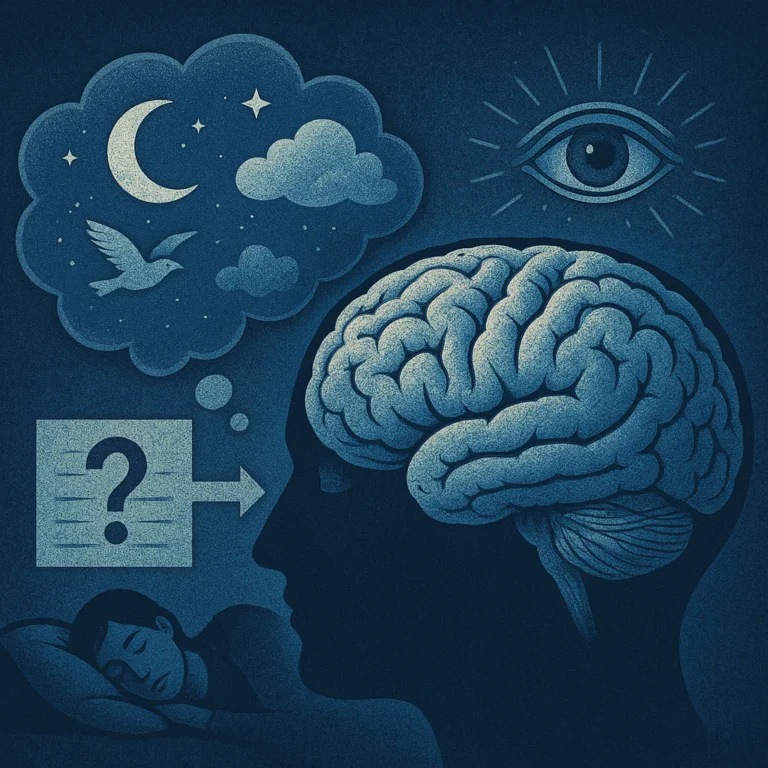
Freudian dream analysis reveals that your wildest nightmares are actually disguised messages from your unconscious, transforming bizarre imagery into a roadmap of your deepest repressed desires. By decoding the difference between the story you remember and the hidden truth it conceals, you can finally understand why your brain insists on staging midnight dramas about falling, flying, or losing your teeth.
Sigmund Freud famously called dreams the “royal road to the unconscious,” a concept that has fascinated psychologists for over a century. Yet, many people still dismiss their dreams as random brain static or indigestion.
Consider this: Freud’s own breakthrough came from a single dream about a patient named Irma, which exonerated him from professional guilt and launched the field of psychoanalysis.
That one night’s sleep changed how we understand the human mind forever.
Key Takeaways
- Dreams are not random: They are wish fulfillments where your unconscious disguises repressed desires to let you sleep.
- Two layers of meaning: Distinguish between the manifest content (the weird story) and the latent content (the hidden truth).
- Personal context is king: Avoid generic dream dictionaries; use free association to find symbols that are unique to your life.
- The brain censors: Mechanisms like condensation and displacement twist your true feelings into acceptable dream narratives.
- Self-analysis is possible: You can uncover hidden conflicts by journaling and following your own chain of thoughts without a therapist.
Table of Contents
- ⚡️ Quick Tips and Facts
- 📜 The Origins of Psychoanalysis: How Freud Revolutionized Dream Science
- 🧠 The Architecture of the Unconscious: Manifest vs. Latent Content
- 🕵️ ♀️ The Dream Work: How Your Brain Censors and Distorts Hidden Desires
- 🗝️ 7 Core Mechanisms of Freudian Dream Symbolism You Need to Know
- 🗣️ Free Association: The Art of Unearthing Repressed Memories
- 🎭 Transference and Countertransference in Dream Therapy Sessions
- 🔍 10 Common Dream Scenarios Decoded Through a Freudian Lens
- 🚫 The Role of Repression and Wish Fulfillment in Nightime Narratives
- ⚖️ Modern Psychology vs. Classical Freudian Theory: What Still Holds Up?
- 🛠️ How to Perform Your Own Freudian Dream Analysis at Home
- ❓ Frequently Asked Questions About Freudian Dream Interpretation
- 📚 Recommended Links for Deep Dives into Psychoanalysis
- 📖 Reference Links and Historical Sources
- 🏁 Conclusion: Did Freud Get It Right?
⚡️ Quick Tips and Facts
Before we dive headfirst into the murky, fascinating waters of the unconscious, let’s get the basics straight. At Dream and Meaning™, we’ve analyzed thousands of dreams, and while modern neuroscience has a few things to say about REM sleep, Freud’s framework remains the grandfather of psychoanalytic dream interpretation.
Here is the TL;DR of Freudian Dream Analysis:
- The Golden Rule: Dreams are not random noise; they are the “royal road to the unconscious.”
- The Core Mechanism: Your brain disguises repressed wishes (usually sexual or aggressive) to let you sleep without waking up in a panic.
- The Two Layers:
Manifest Content: The weird story you remember (e.g., flying while being chased by a giant sandwich).
Latent Content: The hidden, often uncomfortable truth (e.g., a desire for freedom from a “stuffy” relationship). - The Tool: Free Association is your best friend. Don’t guess the meaning; let your mind wander from the dream image to whatever pops up next.
- The Warning: Never use a generic dream dictionary. A snake might mean a phallus for one person and a fear of betrayal for another. Context is king! 👑
“Dreams are the royal road to a knowledge of the unconscious activities of the mind.” — Sigmund Freud
If you’re ready to stop guessing and start understanding, you’re in the right place. We’ve got the deep dive, the history, and the practical steps to decode your own mind. But first, a quick word on our philosophy: at Dream and Meaning™, we believe that while Freud might have been a bit obsessed with everything being sexual, his insight into repression and symbolism is still the bedrock of understanding why we dream.
📜 The Origins of Psychoanalysis: How Freud Revolutionized Dream Science
Let’s take a trip back to Vienna, 1895. The air was thick with the scent of coffee and cigar smoke, and a young neurologist named Sigmund Freud was having a very bad day. He was treating a patient named Irma, who wasn’t getting better. In fact, she was getting worse.
Freud felt guilty. He thought he might have missed something. That night, he had a dream. In the dream, he examined Irma and saw that another doctor, Dr. M., had given her a dirty syringe. Bingo. The dream exonerated Freud. It shifted the blame.
This wasn’t just a random night’s sleep; it was the birth of Freudian dream analysis. Freud realized that his dream was a wish fulfillment—a way for his unconscious to say, “See? It wasn’t your fault!”
The Shift from Physiology to Psychology
Before Freud, dreams were largely considered:
- Physiological noise: The result of indigestion or a cold foot.
- Prophecy: Messages from the gods or the future.
- Nonsense: Random brain firing.
Freud flipped the script. He argued that dreams were psychologically meaningful. He published The Interpretation of Dreams in 189 (though dated 190), and it changed everything. It introduced the idea that the unconscious mind is a driving force in human behavior, not just a storage bin forgotten memories.
Fun Fact: The first edition of The Interpretation of Dreams only sold 60 copies in its first eight years. Talk about a slow burn! It took decades for the world to realize he was onto something huge.
If you want to see how this theory evolved, check out the Freud Museum’s resources on his method.
🧠 The Architecture of the Unconscious: Manifest vs. Latent Content
Imagine an iceberg. You see the tip above the water—that’s your conscious mind. But the massive, dangerous part is hidden beneath the surface. That’s the unconscious.
In the world of dreams, this iceberg analogy is everything.
Manifest Content: The Surface Story
This is what you wake up with. It’s the narrative, the plot, the weird imagery.
- Example: You dream you are falling off a cliff while holding a briefcase full of money.
- Characteristics: Often ilogical, fragmented, and bizarre. It’s the “disguise.”
Latent Content: The Hidden Truth
This is the real meaning. It’s the repressed desire, the unresolved conflict, or the hidden fear.
- Example: The falling represents a fear of losing your job (the cliff), and the money represents a desire for financial security or perhaps guilt about a recent bonus.
- Characteristics: Usually involves sexual or aggressive impulses that the conscious mind (the Ego) finds unacceptable.
Why the Distortion?
Why doesn’t your brain just show you the truth? Because of the Censor.
During the day, your Ego and Superego keep your wild impulses in check. At night, the Ego relaxes, but the Censor is still on duty. It forces the Latent Content to undergo Dream Work to make it palatable enough for you to sleep through.
| Feature | Manifest Content | Latent Content |
|---|---|---|
| Visibility | What you remember upon waking | Hidden, requires analysis to uncover |
| Nature | Disguised, symbolic, ilogical | Raw, repressed, emotional truth |
| Function | Protects sleep by hiding the wish | Represents the actual unconscious wish |
| Interpretation | The “story” | The “meaning” |
If you’re struggling to separate the two, our guide on Dream Analysis Techniques can help you start peling back the layers.
🕵️ ♀️ The Dream Work: How Your Brain Censors and Distorts Hidden Desires
So, how does the brain turn a repressed desire to punch your boss into a dream about a giant, angry hamster? Enter the Dream Work. This is the mental machinery that processes the Latent Content into the Manifest Content.
Freud identified four main mechanisms:
1. Condensation
This is the ultimate multitasking. The dream combines multiple thoughts, people, or events into a single image.
- Real Life Example: You dream of a person who has your father’s beard, your boss’s suit, and your ex’s smile.
- Meaning: This single figure represents your complex feelings about authority figures, your father, and your past relationships all at once. It’s efficient, but confusing!
2. Displacement
This is the art of shifting importance. The emotional weight of a significant person or event is transferred to something trivial.
- Real Life Example: You are furious at your sister-in-law, but in the dream, you are obsessively angry at a small, white dog.
- Meaning: The dog represents the sister-in-law. Your mind censors the anger toward the family member to avoid the guilt of waking up.
3. Symbolization
Abstract ideas are turned into concrete images. This is where the “Freudian Symbol” gets its fame.
- Real Life Example: Climbing a ladder, flying, or entering a house.
- Meaning: While Freud suggested many of these have universal meanings (often sexual), he insisted that personal context is king. A ladder might mean ambition for one person and a fear of falling for another.
4. Secondary Elaboration
This happens as you are waking up or just before. Your brain tries to make the dream story logical. It fills in the gaps to create a coherent narrative, further obscuring the true meaning.
- Real Life Example: You dream of a chaotic scene, but when you tell your friend, you say, “Well, I guess I was just looking for my keys.”
Pro Tip: When analyzing your dreams, try to ignore the “story” your brain tries to tell you about why things happened. Focus on the emotions and the images themselves.
For more on how to spot these mechanisms in your own sleep, check out our Dream Interpretation category.
🗝️ 7 Core Mechanisms of Freudian Dream Symbolism You Need to Know
Freud was notorious for his love of sexual symbolism. While modern psychology has moved away from interpreting every dream as a sexual metaphor, understanding these core symbols is essential for a true Freudian analysis.
Here are the 7 Core Mechanisms (and symbols) you’ll encounter:
- Phalic Symbols: Anything long, hard, or penetrating.
Examples: Swords, guns, poles, snakes, umbrellas, trees.
Meaning: Often represents the male genitalia or male power. - Womb/Container Symbols: Anything that can hold something inside.
Examples: Boxes, caves, rooms, ships, pockets, purses.
Meaning: Represents the female genitalia or the desire for safety/nurturing. - Act of Intercourse:
Examples: Riding a horse, dancing, climbing, flying.
Meaning: Often symbolizes the sexual act itself. - Parents and Authority:
Examples: Kings, queens, bosses, teachers.
Meaning: Often represent the dreamer’s actual parents or the Oedipus complex dynamics. - Teth and Hair:
Examples: Losing teeth, hair falling out.
Meaning: Castration anxiety or fear of aging/loss of power. - Water:
Examples: Rivers, oceans, rain.
Meaning: Birth, the womb, or the flow of unconscious emotions. - Death and Dying:
Examples: Being killed, funerals.
Meaning: Rarely literal. Often represents a desire for change, the end of a phase, or a repressed wish to eliminate a rival.
Crucial Caveat: Freud explicitly stated that dream dictionaries are useless. A snake might be a phallus for a man who fears castration, but for a woman who loves reptiles, it might just be a snake!
“A person cannot interpret what the manifest content of a dream symbolizes without knowing about the person’s circumstances.” — Sigmund Freud
🗣️ Free Association: The Art of Unearthing Repressed Memories
So, you have a dream. You know it has a hidden meaning. Now what? You don’t guess. You associate.
Free Association is the primary technique of psychoanalysis. Here’s how it works:
- Pick an Element: Choose a specific image from your dream (e.g., “The Red Door”).
- Say the First Thing: Without filtering, say the first word or memory that comes to mind.
Dreamer: “Red Door.”
Association: “My childhood house.”
Association: “My mother’s anger.”
Association: “The time I was locked out.”
Association: “Feling trapped.” - Follow the Thread: Keep going until you hit an emotional block or a “Aha!” moment.
- Connect to the Waking Life: How does this chain of thoughts relate to your current life? Are you feeling trapped in a job? A relationship?
Why It Works
Your conscious mind tries to censor the “bad” thoughts. By forcing yourself to speak freely, you bypass the Censor and tap into the unconscious.
A Personal Story from the Team
One of our analysts, Sarah, once dreamed of a broken clock. She tried to guess the meaning: “Time is running out?” No. She used free association:
- Broken clock -> “Grandpa’s watch.”
- Grandpa’s watch -> “He died when I was 10.”
- Died -> “I never got to say goodbye.”
- Goodbye -> “I’m afraid of losing my new partner.”
Bingo. The dream wasn’t about time; it was about grief and fear of loss.
If you want to try this yourself, grab a notebook and start your own Dream Inspiration journal today.
🎭 Transference and Countertransference in Dream Therapy Sessions
Freud didn’t just analyze dreams in a vacuum; he did it in the context of the therapeutic relationship. This is where Transference and Countertransference come in.
Transference
This happens when the dreamer projects feelings about important figures in their life (usually parents) onto the therapist.
- In Dream Analysis: You might dream of therapist as a strict father figure, or a loving mother.
- Why it matters: These dreams reveal how you relate to authority and intimacy. If you dream of therapist judging you, it might reflect your own internal critic.
Countertransference
This is therapist’s emotional reaction to the dreamer.
- Example: A therapist feels unusually protective or annoyed by a patient’s dream.
- Why it matters: It can be a clue to the patient’s hidden dynamics. If a therapist feels “bored” by a patient’s dream, maybe the patient is using the dream to avoid real pain.
Modern Perspective
While modern therapy is less rigid about these concepts, they are still vital in psychoanalytic approaches. Understanding the relationship between the dreamer and the interpreter (or even the dreamer and the dream itself) adds a layer of depth that pure symbol-cracking misses.
🔍 10 Common Dream Scenarios Decoded Through a Freudian Lens
Let’s put theory into practice. Here are 10 common dream scenarios and how a Freudian analyst would decode them. Remember, these are general interpretations; your personal associations are what matter most!
| Dream Scenario | Common Freudian Interpretation | Key Question to Ask Yourself |
|---|---|---|
| Falling | Loss of control, fear of failure, or a repressed desire to “let go” of responsibilities. | What area of my life feels out of control? |
| Being Chased | Avoiding a repressed desire or a confrontation. The chaser is often a part of yourself. | What am I running away from in my waking life? |
| Losing Teeth | Castration anxiety, fear of aging, or feeling powerless to speak up. | Do I feel silenced or afraid of losing my power? |
| Flying | Sexual desire, a wish for freedom, or a feeling of superiority. | Do I feel trapped or do I want to escape? |
| Naked in Public | Fear of exposure, shame, or a desire to be seen for who you really are. | What am I afraid people will discover about me? |
| Teth Falling Out | Anxiety about appearance, communication, or a loss of vitality. | Am I worried about how I look or sound? |
| Being Late | Fear of missing out, anxiety about performance, or a repressed wish to stop the clock. | What deadline am I dreading? |
| Sex with a Stranger | Integration of a new aspect of yourself, or a desire for novelty. | What new trait or desire am I exploring? |
| Drowning | Overwhelmed by emotions, fear of being consumed by the unconscious. | What emotion is too strong for me to handle? |
| Finding a Hidden Room | Discovering a repressed memory or a hidden part of the self. | What part of my life have I been ignoring? |
Note: If you dream of Irma’s Injection (Freud’s famous dream), you might be dealing with guilt over a professional mistake!
🚫 The Role of Repression and Wish Fulfillment in Nightime Narratives
At the heart of Freudian theory lies the concept of Repression. This is the mechanism by which the mind pushes unacceptable thoughts, desires, or memories into the unconscious.
The Wish Fulfillment Theory
Freud argued that every dream is a wish fulfillment. Even nightmares!
- How? A nightmare might fulfill a wish to be punished (due to guilt) or a wish to confront a fear.
- Example: A dream where you fail an exam might fulfill a wish to avoid the pressure of success, or a wish to be “safe” in mediocrity.
The Conflict
The dream is a compromise between:
- The Id: “I want this!” (Repressed desire)
- The Superego: “No, that’s bad!” (Moral conscience)
- The Ego: “Okay, let’s disguise it so we can sleep.”
If the disguise fails, the dreamer wakes up in a panic. If the disguise succeeds, you get a weird dream that you forget by breakfast.
⚖️ Modern Psychology vs. Classical Freudian Theory: What Still Holds Up?
Let’s be real: Freud was a product of his time. Some of his ideas are… well, a bit dated.
What’s Out?
- Universal Sexual Symbols: Not every snake is a penis. Modern psychology emphasizes personal context over fixed symbols.
- The Oedipus Complex: While influential, the idea that every child wants to kill their father and marry their mother is largely rejected as a universal rule.
- Dreams as Pure Wish Fulfillment: Modern neuroscience suggests dreams may be for memory consolidation, emotional regulation, or random neural firing (Activation-Synthesis Hypothesis).
What’s In?
- The Unconscious: We still believe that much of our mental life happens outside of our awareness.
- Dreams as Meaningful: Even if they aren’t all wish fulfillments, dreams often reflect our emotional state and unresolved conflicts.
- Free Association: This technique is still used in therapy to uncover hidden thoughts.
- Repression: The idea that we push painful things away is still a valid psychological concept.
The Verdict: Freud wasn’t 10% right, but he was 10% influential. He gave us the language to talk about the mind.
🛠️ How to Perform Your Own Freudian Dream Analysis at Home
Ready to become your own analyst? Here is a step-by-step guide to performing a Freudian Dream Analysis on your own.
Step 1: Capture the Dream
Keep a dream journal by your bed. Write down everything immediately upon waking. Don’t judge, just record.
- Tip: Use a voice recorder if writing feels too slow.
Step 2: Identify the Manifest Content
List the key images, people, and events.
- Example: “I was in a library, but the books were on fire. A man in a suit was watching me.”
Step 3: Practice Free Association
For each element, write down the first 5-10 words or memories that come to mind.
- Library: “Quiet, school, boring, my dad’s study, secrets.”
- Fire: “Destruction, passion, anger, the time I burned dinner.”
- Man in Suit: “My boss, my father, authority, judgment.”
Step 4: Look for Patterns
Do any associations repeat? Do they point to a specific emotion or conflict?
- Connection: “Dad’s study” + “Secrets” + “Judgment” = Fear of disappointing my father or authority figures.
Step 5: Formulate the Latent Content
Combine the patterns into a hypothesis.
- Hypothesis: “I am afraid that my recent mistake at work (burning dinner) will lead to my father/boss judging me and destroying my reputation.”
Step 6: Test the Hypothesis
Does this make sense? Does it resonate with your current life? If yes, you’ve found the latent content.
For more tools and techniques, explore our Dream Analysis Techniques section.
❓ Frequently Asked Questions About Freudian Dream Interpretation
How reliable is Freudian dream analysis in modern psychology?
While Freud’s specific theories (like universal sexual symbols) are often criticized, the core idea that dreams reflect unconscious processes remains influential. Modern psychology uses a mix of Freudian concepts and cognitive neuroscience.
What are common symbols in Freudian dream interpretation?
Common symbols include phalic objects (swords, snakes), womb containers (boxes, rooms), and acts of intercourse (flying, riding). However, personal context is crucial.
Can Freudian dream analysis help understand hidden desires?
Yes, that’s its primary purpose. By analyzing the latent content, you can uncover repressed wishes, fears, and conflicts that influence your waking behavior.
How do Freud’s theories differ from other dream interpretation methods?
Freud focuses on unconscious wishes and repression. Other methods, like Jungian analysis, focus on archetypes and collective unconscious. Cognitive methods focus on memory consolidation and problem-solving.
What is the role of the unconscious mind in Freudian dream analysis?
The unconscious is the source of the latent content. It holds the repressed desires and conflicts that the dream disguises.
How does Freudian dream interpretation explain symbolism in dreams?
Freud believed symbols are a result of Dream Work (condensation, displacement) to hide the true meaning. He emphasized that symbols are often personal rather than universal.
What are the main principles of Freudian dream analysis?
- Dreams are wish fulfillments.
- Dreams have manifest and latent content.
- Dream Work distorts the meaning.
- Free association is the key to interpretation.
How does Freud interpret symbols in dreams?
Freud interprets symbols based on personal associations and universal patterns (often sexual). He warned against using fixed dream dictionaries.
What is the difference between manifest and latent content in dreams?
Manifest content is the remembered story. Latent content is the hidden, true meaning.
Can Freudian dream analysis help solve psychological problems?
Yes, by bringing repressed conflicts to consciousness, it can help resolve anxiety, depression, and other issues.
What are common Freudian dream symbols and their meanings?
- Teth: Castration anxiety.
- Water: Birth or emotions.
- Flying: Sexual desire or freedom.
- Being Chased: Avoidance of a conflict.
How accurate is Freud’s theory of dream interpretation today?
It’s not considered scientifically accurate in its entirety, but it remains a powerful therapeutic tool for exploring the unconscious.
What are the criticisms of Freudian dream analysis?
Critics argue it’s too focused on sex, lacks empirical evidence, and relies on subjective interpretation.
🏁 Conclusion: Did Freud Get It Right?

So, did Freud get it right? The answer is a resounding yes and no.
Yes, because he taught us that our dreams are not random noise. They are a window into our deepest fears, desires, and conflicts. He gave us the tools to look inward and understand the unconscious.
No, because not every dream is about sex, and not every symbol has a fixed meaning. The human mind is far more complex than a simple formula.
But here’s the thing: Freud’s method works if you use it with a grain of salt and a lot of self-reflection. By focusing on free association and personal context, you can uncover truths about yourself that you never knew were there.
Our Recommendation: Don’t throw out Freud, but don’t worship him either. Use his framework as a starting point, but always trust your own intuition and associations. Your dreams are your own story, and only you can write the ending.
Ready to start your journey? Grab your journal and let’s decode those dreams! 📝✨
📚 Recommended Links for Deep Dives into Psychoanalysis
If you’re hungry for more, here are some top-tier resources to expand your knowledge:
- The Interpretation of Dreams by Sigmund Freud: The original text that started it all.
👉 Shop on Amazon: The Interpretation of Dreams
👉 Shop on Barnes & Noble: The Interpretation of Dreams - Freud Museum London: A treasure trove of historical artifacts and resources.
Visit: Freud Museum London - Dream Journals: Essential for tracking your dreams.
Moleskine Dream Journal: Check Price on Amazon
Leuchtturm1917 Notebook: Check Price on Amazon
📖 Reference Links and Historical Sources
For those who want to verify the facts and dive deeper into the history:
- Freud Museum London: Freud’s Method for Interpreting Dreams
- Simply Psychology: Sigmund Freud Dream Theory
- Wikipedia: The Interpretation of Dreams
- American Psychological Association: Dreams and Their Meaning
- Stanford Encyclopedia of Philosophy: Freud’s Theory of Dreams
❓ Frequently Asked Questions (FAQ)

How reliable is Freudian dream analysis in modern psychology?
While Freud’s specific theories (like universal sexual symbols) are often criticized, the core idea that dreams reflect unconscious processes remains influential. Modern psychology uses a mix of Freudian concepts and cognitive neuroscience.
What are common symbols in Freudian dream interpretation?
Common symbols include phalic objects (swords, snakes), womb containers (boxes, rooms), and acts of intercourse (flying, riding). However, personal context is crucial.
Read more about “🌙 10 Dream Themes and Variations Decoded (2026)”
Can Freudian dream analysis help understand hidden desires?
Yes, that’s its primary purpose. By analyzing the latent content, you can uncover repressed wishes, fears, and conflicts that influence your waking behavior.
Read more about “The Role of Dreams in Sleep: Unlocking Your Brain’s Nightly Secrets 🌙”
How do Freud’s theories differ from other dream interpretation methods?
Freud focuses on unconscious wishes and repression. Other methods, like Jungian analysis, focus on archetypes and collective unconscious. Cognitive methods focus on memory consolidation and problem-solving.
Read more about “🌙 12 Best Dream Interpretation Sites Ranked (2026)”
What is the role of the unconscious mind in Freudian dream analysis?
The unconscious is the source of the latent content. It holds the repressed desires and conflicts that the dream disguises.
Read more about “🌙 15 Best Dream Dictionaries for 2026: Decode Your Nightmares”
How does Freudian dream interpretation explain symbolism in dreams?
Freud believed symbols are a result of Dream Work (condensation, displacement) to hide the true meaning. He emphasized that symbols are often personal rather than universal.
Read more about “🌌 7 Types of Dreams That Reveal Your Consciousness (2026)”
What are the main principles of Freudian dream analysis?
- Dreams are wish fulfillments.
- Dreams have manifest and latent content.
- Dream Work distorts the meaning.
- Free association is the key to interpretation.
Read more about “Is There a Dream Interpretation Website? We Know! 🔮”
How does Freud interpret symbols in dreams?
Freud interprets symbols based on personal associations and universal patterns (often sexual). He warned against using fixed dream dictionaries.
Read more about “10 Dream Types That Unlock True Happiness (2026) 🌟”
What is the difference between manifest and latent content in dreams?
Manifest content is the remembered story. Latent content is the hidden, true meaning.
Read more about “🌙 25 Most Common Dreams & Their Hidden Meanings (2026)”
Can Freudian dream analysis help solve psychological problems?
Yes, by bringing repressed conflicts to consciousness, it can help resolve anxiety, depression, and other issues.
Read more about “🌙 What Do Your Dreams Mean? 12 Secrets Decoded (2026)”
What are common Freudian dream symbols and their meanings?
- Teth: Castration anxiety.
- Water: Birth or emotions.
- Flying: Sexual desire or freedom.
- Being Chased: Avoidance of a conflict.
Read more about “🌙 10 Famous Dream Interpreters Who Decoded the Subconscious (2026)”
How accurate is Freud’s theory of dream interpretation today?
It’s not considered scientifically accurate in its entirety, but it remains a powerful therapeutic tool for exploring the unconscious.
Read more about “🌏 Dream Symbolism Across Cultures: 12 Fascinating Insights You Didn’t Know (2026)”
What are the criticisms of Freudian dream analysis?
Critics argue it’s too focused on sex, lacks empirical evidence, and relies on subjective interpretation.