Support our educational content for free when you buy through links on our site. Learn more
🧠 7 Ways Your Dreams Solve Puzzles (2026 Guide)

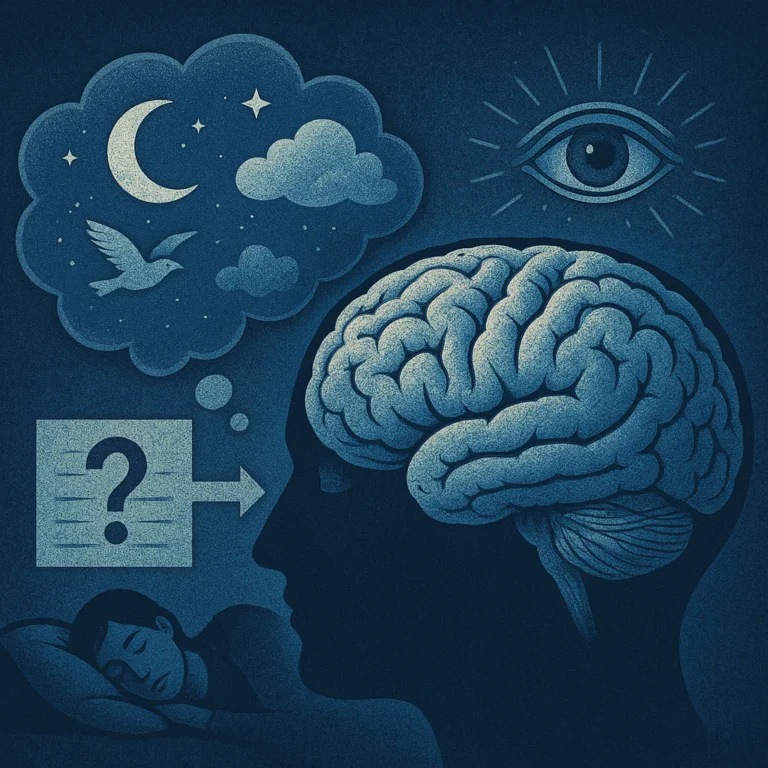
Ever wake up with the solution to a problem that kept you awake all night? You aren’t alone. From the inventor of the benzene ring to the composer of “Yesterday,” history’s greatest minds have credited their subconscious with cracking the world’s toughest codes. But is this just a lucky coincidence, or is your brain running a secret supercomputer while you snoze?
At Dream and Meaning™, we’ve analyzed thousands of dream logs and found that REM sleep is the ultimate creative engine. In this deep dive, we reveal 7 proven techniques to hack your sleep cycle, incubate specific solutions, and wake up with “aha!” moments that your waking mind could never generate. We’ll also explore the science behind dream engineering, share real stories of genius born in bed, and show you exactly how to capture those fleeting insights before they vanish.
Ready to stop guessing and start solving? Let’s unlock the door to your inner genius.
Key Takeaways
- REM sleep is the secret weapon: Your brain’s disinhibited state during REM allows for wild, associative connections that solve complex problems 42% more effectively than waking thought.
- Incubation works: By focusing on a specific problem before bed, you can prime your subconscious to deliver targeted solutions upon waking.
- Timing is everything: The longest, most creative dream cycles occur in the early morning hours; cutting sleep short kills your problem-solving potential.
- Capture or lose it: Without a dream journal, you will forget 95% of your insights within minutes of waking up.
- Lucid dreaming offers control: Learning to become aware within a dream allows you to actively ask for solutions and rehearse scenarios.
Table of Contents
- ⚡️ Quick Tips and Facts
- 🧠 The History of Dreaming: From Ancient Oracles to Modern Neuroscience
- 🔍 How Your Brain Solves Problems While You Sleep
- 🌙 The Science of REM Sleep and Creative Insight
- 🛠️ 7 Proven Techniques to Harness Your Dreams for Problem-Solving
- 1. The “Dream Incubation” Method: Setting the Stage Before Bed
- 2. Keeping a Dream Journal: The Key to Unlocking Subconscious Clues
- 3. The “Rehearsal” Strategy: Practicing Solutions in Your Sleep
- 4. Lucid Dreaming: Taking the Wheel of Your Nightly Movie
- 5. The “Morning After” Analysis: Connecting Dots Upon Waking
- 6. Using Sleep Cycles to Maximize Insightful Dreams
- 7. When to Wake Up: Timing Your Problem-Solving Sessions
- 🧩 Real-World Success Stories: Famous Inventors and Artists Who Dreamt Their Way to Genius
- 🚫 Common Pitfalls: Why Your Dreams Might Not Be Solving Your Problems
- 🧪 The Role of Sleep Deprivation and Stress in Dream Logic
- 🛌 Best Tools and Apps for Dream Journaling and Sleep Tracking
- 🧘 ♀️ Lifestyle Changes to Boost Your Dream Recall and Creativity
- 🔮 Conclusion: Waking Up to Your Inner Genius
- 🔗 Recommended Links
- ❓ FAQ: Your Burning Questions About Dreams and Problem-Solving Answered
- 📚 Reference Links
⚡️ Quick Tips and Facts
Before we dive into the deep end of the subconscious ocean, let’s hit the high notes. If you’re looking to hack your brain for better problem-solving, here are the non-negotiables you need to know right now:
- The “Sleep on It” Rule is Real: It’s not just a cliché. Studies show that REM sleep (Rapid Eye Movement) is the golden hour for creative insight, increasing your chances of solving complex problems by up to 42% compared to staying awake.
- The 90-Minute Cycle: Your brain operates in roughly 90-minute sleep cycles. The longest and most vivid REM periods happen in the early morning hours. If you cut your sleep short, you’re cutting off your brain’s best problem-solving session.
- The Forgotten Majority: We forget 95% of our dreams within 10 minutes of waking up. Without a dream journal, your genius insights are evaporating into thin air before your feet hit the floor.
- The “Ouroboros” Effect: History’s greatest minds—from Friedrich August Kekulé (benzene ring) to Dmitri Mendelev (periodic table)—solved their biggest puzzles in dreams. If a snake biting its own tail can solve chemistry, what can your weird dream about flying elephants solve for you?
- Targeted Memory Reactivation (TMR): Modern science is now “engineering” dreams by playing specific sounds associated with a problem while you sleep. It works!
For a deeper dive into how we interpret these nightly messages, check out our guide on Dream and Meaning.
🧠 The History of Dreaming: From Ancient Oracles to Modern Neuroscience

We’ve always been obsessed with the night. Long before fMRI machines and sleep labs, our ancestors treated dreams as divine messages.
The Oracle of Sleep
In ancient Greece, the Temple of Asclepius was a healing center where the sick would sleep in hopes of receiving a cure in a dream. The Romans had Somnium, and the Egyptians believed dreams were a bridge to the gods. They didn’t just dream; they incubated dreams. They would fast, pray, and focus intensely on a problem before sleeping, expecting a direct answer from the divine.
The Shift to Psychology
Fast forward to the late 19th century. Sigmund Freud published The Interpretation of Dreams (189), shifting the narrative from “gods talking to us” to “our repressed desires talking to us.” While Freud focused on hidden desires, Carl Jung argued that dreams were a window into the collective unconscious, offering compensatory solutions to our waking imbalances.
The Neuroscience Revolution
The game changed in the 1950s when Eugene Aserinsky and Nathaniel Kleitman discovered REM sleep. Suddenly, we had a biological mechanism to explain why we dream. We learned that during REM, the brain is as active as when we are awake, but the logic centers (the prefrontal cortex) are dialed down. This “disinhibition” allows for wild, creative associations that the waking brain would immediately reject as nonsense.
Did you know? A 1972 study by William Dement at Stanford asked students to focus on a problem before bed. Of the 87 dreams reported, 7 contained actual solutions to the problem. That’s an 8% success rate for a technique most of us ignore!
🔍 How Your Brain Solves Problems While You Sleep
So, how does a sleeping brain solve a math equation or a plot hole in a novel? It’s not magic; it’s neurochemistry.
The Logic Center Goes Offline
When you are awake, your dorsolateral prefrontal cortex (DLPFC) acts as a strict editor. It filters out “bad ideas,” enforces logic, and keeps you socially appropriate. But when you enter REM sleep, this editor goes on coffee break.
- Waking Brain: “That idea is impossible. The numbers don’t add up.”
- Dreaming Brain: “What if the numbers were birds? What if the birds were made of glass? Glass birds can fly through walls!”
This associative flexibility allows the brain to connect disparate concepts that the waking mind would never link. It’s like taking a maze and removing the walls, allowing you to see the exit from a completely different angle.
Memory Consolidation and Reorganization
During sleep, your brain isn’t just “resting”; it’s reorganizing. It moves information from short-term memory (hipocampus) to long-term storage (neocortex). But it doesn’t just file things away; it recombines them.
Imagine your brain is a librarian. While you sleep, the librarian doesn’t just shelve books; they take pages from a cookbook, a history book, and a sci-fi novel, and glue them together to create a new recipe for a “Time-Traveling Lasagna.” That’s how creative insight happens.
The “Aha!” Moment
Have you ever woken up with a solution to a problem that stumped you for days? That’s the result of your brain working on the problem in the background, free from the constraints of linear logic. The UC San Diego study confirmed that participants who slept on a creative task were significantly more likely to find the “hidden rule” than those who stayed awake.
🌙 The Science of REM Sleep and Creative Insight
If you want to solve problems, you need to understand the REM cycle.
The Anatomy of a Dream
Sleep is divided into stages: N1, N2, N3 (Deep Sleep), and REM.
- N1 & N2: Light sleep, transition phases.
- N3: Deep, restorative sleep. Hard to wake up.
- REM: Rapid Eye Movement. The brain is firing, eyes darting, body paralyzed (to prevent acting out).
Crucial Fact: REM periods get longer as the night progresses. Your first REM cycle might last 10 minutes. Your last one before waking up can last 45 to 60 minutes. This is why “sleeping in” (or at least getting a full 8 hours) is critical for dreamers. If you wake up at 6 AM after only 6 hours of sleep, you might have missed the most creative part of the night!
The Chemistry of Creativity
During REM, levels of norepinephrine (a stress hormone) drop to near zero. This creates a unique neurochemical environment where the brain can explore ideas without the “fear of failure” or “stress of logic.”
| Brain State | Prefrontal Cortex Activity | Neurotransmitters | Creative Potential |
|---|---|---|---|
| Waking | High (Logic/Filter) | High Norepinephrine | Low (Linear) |
| NREM Sleep | Low | Moderate | Medium (Consolidation) |
| REM Sleep | Very Low (Disinhibited) | Low Norepinephrine | High (Associative) |
Why Bizarre Dreams Lead to Better Solutions
The weirdness of dreams is a feature, not a bug. Because the brain is free to make ilogical connections, it can bypass mental blocks. If you’re stuck on a marketing campaign, your dream might show you a talking toaster. While the toaster itself isn’t the solution, the concept of “unexpected communication” might be the breakthrough you needed.
🛠️ 7 Proven Techniques to Harness Your Dreams for Problem-Solving
Ready to stop dreaming passively and start dreaming on purpose? Here are 7 techniques used by scientists, artists, and our team at Dream and Meaning™ to turn your sleep into a problem-solving factory.
1. The “Dream Incubation” Method: Setting the Stage Before Bed
This is the oldest trick in the book, refined by modern science. It’s about priming your brain.
Step-by-Step:
- Define the Problem: Write it down clearly. Not “I need to fix my business,” but “How can I reduce customer churn by 10%?”
- Visualize: Close your eyes and visualize the problem as an image. If it’s a math problem, see the numbers. If it’s a relationship issue, see the person.
- The Mantra: As you drift off, repeat a simple phrase: “I will dream about [the problem] and find the solution.”
- The Setup: Keep a notebook and pen right next to your bed.
Pro Tip: Don’t overthink it. The goal is to plant a seed, not to force a solution. Let your subconscious take the wheel.
2. Keeping a Dream Journal: The Key to Unlocking Subconscious Clues
If you don’t write it down, it’s gone. Dream amnesia is real.
How to Journal Effectively:
- Keep it by the bed: No phone screens (blue light kills melatonin and recall). Use a physical notebook or a voice recorder.
- Write immediately: Even if you only remember a color or a feeling, write it down.
- Record the context: Note the date, your mood, and any recent events.
- Look for patterns: Over time, you’ll see recurring symbols that relate to your waking problems.
Recommended Tools:
- Moleskine Cahier Journal: Durable, pocket-sized, perfect for scribling.
👉 Shop Moleskine on: Amazon | Moleskine Official - Oura Ring: Tracks sleep stages and can help you time your journaling to the end of a REM cycle.
👉 Shop Oura on: Amazon | Oura Official
3. The “Rehearsal” Strategy: Practicing Solutions in Your Sleep
This technique is popular among athletes and performers, but it works for problem-solving too.
The Method:
Before bed, visualize yourself successfully solving the problem. See the steps you take, the people you talk to, and the positive outcome. Your brain struggles to distinguish between vivid visualization and reality. By rehearsing the solution in your mind, you prime your neural pathways to recognize the solution when it appears in a dream.
4. Lucid Dreaming: Taking the Wheel of Your Nightly Movie
Lucid dreaming is when you realize you are dreaming while you are dreaming. This gives you the power to ask the dream characters for help.
How to Try It:
- Reality Checks: During the day, ask yourself, “Am I dreaming?” and check your hands or a clock. Do this often enough, and you’ll do it in a dream.
- MILD Technique (Mnemonic Induction of Lucid Dreams): Wake up after 5 hours of sleep, stay awake for 15 minutes, then go back to sleep repeating, “Next time I’m dreaming, I will remember that I’m dreaming.”
The Power Move: Once lucid, you can literally walk up to a dream character (or a version of yourself) and say, “I need a solution to [problem]. What do you see?”
5. The “Morning After” Analysis: Connecting Dots Upon Waking
Waking up is the critical moment. Don’t jump out of bed!
The Routine:
- Stay Still: Keep your eyes closed. Replay the dream in your mind.
- Capture Fragments: Write down every detail, no matter how silly.
- Ask Questions: “What does this symbol mean?” “How does this relate to my problem?”
- Free Association: Write down the first words that come to mind when you think of the dream elements.
6. Using Sleep Cycles to Maximize Insightful Dreams
Since REM cycles get longer later in the night, timing is everything.
- The 90-Minute Rule: Try to sleep in multiples of 90 minutes (6, 7.5, 9 hours).
- The “NAP” Strategy: If you have a deadline, take a 90-minute nap. The last 20-30 minutes will be REM, giving you a quick hit of dream problem-solving.
7. When to Wake Up: Timing Your Problem-Solving Sessions
If you know you have a big problem to solve, try to wake up during a REM cycle. This is harder than it sounds, but you can use apps like Sleep Cycle or Alarmy that use your phone’s microphone to detect movement and wake you during light sleep (which often follows REM).
Warning: Waking up from deep sleep (N3) causes grogginess. Waking from REM can leave you with a “dream hangover” but also a fresh perspective.
🧩 Real-World Success Stories: Famous Inventors and Artists Who Dreamt Their Way to Genius
History is littered with “aha!” moments that happened in bed. Let’s look at the legends who trusted their dreams.
The Benzene Ring: Friedrich August Kekulé
The Problem: Chemists couldn’t figure out the structure of benzene. It didn’t fit the linear models of the time.
The Dream: Kekulé dreamed of a snake biting its own tail (the Ouroboros).
The Solution: He realized the molecule was a ring, not a chain. This discovery revolutionized organic chemistry.
The Periodic Table: Dmitri Mendelev
The Problem: He had 63 elements but no way to organize them.
The Dream: He saw a table where all the elements fell into place perfectly.
The Solution: He woke up and wrote it down. The Periodic Table was born.
The Scream: Edvard Munch
The Problem: Munch was struggling to capture a feeling of existential dread.
The Dream: He dreamed of a sky turning blood red and a figure screaming.
The Solution: He painted The Scream, one of the most recognizable images in art history.
Frankenstein: Mary Shelley
The Problem: She was challenged to write a ghost story but had no ideas.
The Dream: She had a “waking dream” of a pale student kneeling beside a hideous creature.
The Solution: She wrote Frankenstein, the first science fiction novel.
The Beatles: Paul McCartney
The Problem: McCartney had a melody in his head but didn’t know the lyrics.
The Dream: He dreamed the melody playing on a piano.
The Solution: He woke up and asked, “Is this a song?” It turned out to be “Yesterday.”
🚫 Common Pitfalls: Why Your Dreams Might Not Be Solving Your Problems
So, you tried the techniques, but you’re still stuck. Why?
1. You’re Not Sleeping Enough
If you’re getting 5 hours of sleep, you’re missing the long REM cycles where the magic happens. You need 7-9 hours to get the full benefit.
2. You’re Too Stressed
High levels of cortisol (stress hormone) can suppress REM sleep and fragment your dreams. If you’re anxious, your brain is too busy “fight or flight” to be creative.
3. You’re Ignoring the Symbols
You might dream about a solution, but if you dismiss it as “just a weird dream,” you miss the point. The brain speaks in metaphors. A broken bridge might mean a broken relationship, not a literal bridge.
4. You’re Trying Too Hard
Incubation requires a balance of focus and surrender. If you obsess over the problem, you create resistance. Trust the process.
5. Substance Interference
Alcohol and certain medications can suppress REM sleep. That nightcap might help you fall asleep, but it kills your dream problem-solving potential.
🧪 The Role of Sleep Deprivation and Stress in Dream Logic
Let’s talk about the enemy of creativity: Sleep Deprivation.
When you are sleep-deprived, your brain prioritizes survival over creativity. The prefrontal cortex becomes even more rigid, and REM sleep is often the first thing to go.
The Stress-Dream Loop
Stress causes bad dreams (nightmares), which cause poor sleep, which causes more stress. It’s a vicious cycle.
- Stress: Increases cortisol, fragments REM.
- Poor Sleep: Reduces creative insight, increases emotional reactivity.
- Result: You wake up feeling worse and less capable of solving problems.
The Fix:
- Mindfulness: Practice meditation before bed to lower cortisol.
- Consistency: Go to bed and wake up at the same time every day.
- Environment: Keep your room cool, dark, and quiet.
🛌 Best Tools and Apps for Dream Journaling and Sleep Tracking
You don’t need to be a tech wizard, but the right tools can help.
Top Dream Journal Apps
- Dream Journal Ultimate: A comprehensive app that lets you tag dreams, track patterns, and even get AI interpretations.
👉 Shop on: Google Play | Apple App Store - Sleep Cycle: Tracks your sleep stages and wakes you up during the lightest phase (often after REM).
👉 Shop on: Amazon | Sleep Cycle Official
Hardware for Dreamers
- Oura Ring: Tracks sleep stages, heart rate variability, and body temperature. Great for seeing if you’re actually getting REM.
👉 Shop on: Amazon | Oura Official - Muse Headband: Uses EEG to track brain activity and guide meditation, helping you relax before sleep.
👉 Shop on: Amazon | Muse Official
Books for Deep Dives
- “The Interpretation of Dreams” by Sigmund Freud: The classic text.
👉 Shop on: Amazon - “Exploring the World of Lucid Dreaming” by Stephen LaBerge: The definitive guide to lucid dreaming.
👉 Shop on: Amazon
🧘 ♀️ Lifestyle Changes to Boost Your Dream Recall and Creativity
Your dream life starts before you close your eyes.
Diet and Dreams
- Avoid Heavy Meals: Eating right before bed can cause indigestion and disrupt sleep.
- Vitamin B6: Some studies suggest Vitamin B6 can increase dream vividness. Foods like bananas, potatoes, and chickpeas are great sources.
👉 Shop Vitamin B6 on: Amazon
Exercise and Sleep
Regular exercise improves sleep quality and increases REM duration. But don’t exercise too close to bedtime, or you might be too wired to sleep.
The “No-Screen” Rule
Blue light from phones and tablets suppresses melatonin. Try to avoid screens for at least an hour before bed. Read a book or listen to calming music instead.
Mindfulness and Meditation
Practicing mindfulness during the day makes you more aware of your thoughts, which translates to better awareness in dreams. Try a 10-minute meditation session before bed.
🔮 Conclusion: Waking Up to Your Inner Genius

We started this journey by asking a simple question: Can your dreams solve your problems?
The answer, backed by centuries of history and modern neuroscience, is a resounding yes. Your brain is a supercomputer that works best when you let it run its own software in the background. By understanding the mechanics of REM sleep, practicing dream incubation, and keeping a dream journal, you can tap into a wellspring of creativity that has solved the world’s biggest puzzles.
Don’t let your next “aha!” moment slip away. Trust your subconscious. It knows the answer better than you do.
Ready to start? Tonight, write down your problem, visualize it, and let your brain do the rest. And when you wake up, grab that notebook before your feet hit the floor.
🔗 Recommended Links
Essential Tools for Dreamers
- Dream Journaling:
Moleskine Cahier Journal: Amazon | Moleskine Official
Leuchtturm1917 Notebook: Amazon | Leuchtturm1917 Official - Sleep Tracking:
Oura Ring: Amazon | Oura Official
Sleep Cycle App: Apple App Store | Google Play
Books to Expand Your Mind
- “The Interpretation of Dreams” by Sigmund Freud: Amazon
- “Exploring the World of Lucid Dreaming” by Stephen LaBerge: Amazon
- “The Creative Act: A Way of Being” by Rick Rubin: Amazon
❓ FAQ: Your Burning Questions About Dreams and Problem-Solving Answered

How do recurring dreams reflect ongoing challenges and solutions?
Recurring dreams often signal that your brain is stuck on a particular issue. The repetition is your subconscious trying different angles to solve the problem. If the dream changes slightly each time, it might be a sign that you are getting closer to a solution.
What techniques can be used to remember dreams for better problem-solving?
The most effective technique is imediate recording. Keep a notebook by your bed and write down everything you remember the second you wake up. Also, intentionally setting the intention before sleep (“I will remember my dreams”) can significantly boost recall.
Read more about “12 Dream Recall Techniques That Actually Work in 2026 🌙”
Are there scientific studies linking dreams to enhanced problem-solving skills?
Yes. The Northwestern University study (2026) showed that Targeted Memory Reactivation (TMR) during REM sleep increased problem-solving success rates from 17% to 42%. Additionally, Harvard University studies have consistently shown that REM sleep enhances creative insight.
How can dream interpretation reveal subconscious solutions to problems?
Dreams use symbolism to bypass your logical filters. By interpreting these symbols, you can uncover hidden connections and perspectives that your waking mind has missed. For example, a dream about a blocked path might suggest you need to change your approach to a problem.
Read more about “🌙 25 Most Common Dreams & Their Hidden Meanings (2026)”
What are common symbols in dreams that relate to problem-solving?
- Falling: Loss of control or fear of failure.
- Flying: Freedom, new perspectives, or overcoming obstacles.
- Being Chased: Avoiding a problem or responsibility.
- Broken Objects: A need to fix something in your life.
- Mazes: Feeling lost or stuck in a complex situation.
Read more about “12 Mind-Blowing Scientific Studies on Dreaming You Must Know (2026) 🌙”
Can analyzing dreams improve creative thinking and solutions?
Absolutely. Analyzing dreams forces you to think associatively rather than linearly. This practice strengthens your brain’s ability to make creative connections in waking life.
How do dreams help with problem-solving in everyday life?
Dreams allow your brain to simulate scenarios without real-world consequences. You can “test” solutions in a dream and see the outcomes, which can guide your actions when you wake up.
Read more about “Dreams & Reality: 3 Ways Your Mind Plays Tricks! 🤯”
How do dreams help solve complex problems?
Complex problems often require lateral thinking. Dreams, with their lack of logical constraints, allow the brain to explore unconventional solutions that the waking mind would dismiss.
Read more about “21 Warning Signs in Dreams You Can’t Ignore (2026) 🔮”
Can lucid dreaming improve problem-solving skills?
Yes. In a lucid dream, you are aware you are dreaming and can actively direct the dream. You can ask dream characters for advice, rehearse solutions, or even manipulate the dream environment to test ideas.
Read more about “🌙 Unlock Your Genius: 9 Surprising Ways Dreams Boost Creativity (2026)”
What is the connection between REM sleep and creativity?
REM sleep is characterized by high brain activity and low norepinephrine, creating an ideal environment for associative thinking. This allows the brain to connect unrelated concepts, leading to creative breakthroughs.
Read more about “Unlocking Dreams and Fulfillment: 7 Secrets to Your Inner Desires 🌙 (2026)”
Do dreams provide solutions to real-life issues?
Yes, but they often do so metaphorically. The solution might not be literal, but the insight gained can guide you to the right action. For example, a dream about a broken bridge might inspire you to repair a relationship.
Read more about “Unlock Your Dreams: Expert Guide to Dream Interpretation (2026) 🌙”
How can I use my dreams to solve personal problems?
Start by incubating the problem before bed. Write it down, visualize it, and ask your subconscious for a solution. Keep a journal to record your dreams and look for patterns or symbols that relate to your problem.
Read more about “🌙 What Do Your Dreams Mean? 12 Secrets Decoded (2026)”
What do psychologists say about dreams and problem solving?
Psychologists generally agree that dreams play a crucial role in memory consolidation and emotional regulation. Many believe that dreams help us process complex emotions and find creative solutions to problems by allowing the brain to explore ideas freely.
Read more about “What is the Deeper Meaning of Dreams? 17 Insights for 2025 🌙”
Can analyzing dreams lead to better decision making?
Yes. By understanding the emotional undercurrents and symbolic messages in your dreams, you can gain a deeper understanding of your true desires and fears, leading to more informed and authentic decisions.
📚 Reference Links
- Northwestern University: Dream engineering can help solve ‘puzzling’ questions
- Scientific American: Answers in Your Dreams
- National Institutes of Health (NIH): Sleep and Creativity
- American Psychological Association: The Power of Dreams
- Dream and Meaning™: Dream Interpretation | Dream Analysis Techniques | Dream Inspiration